Want the occasional useful email?
New calculators, updated cost data, and the occasional money-saving guide. No account needed, and you can leave any time.
By Alex Diaz · How we calculate this
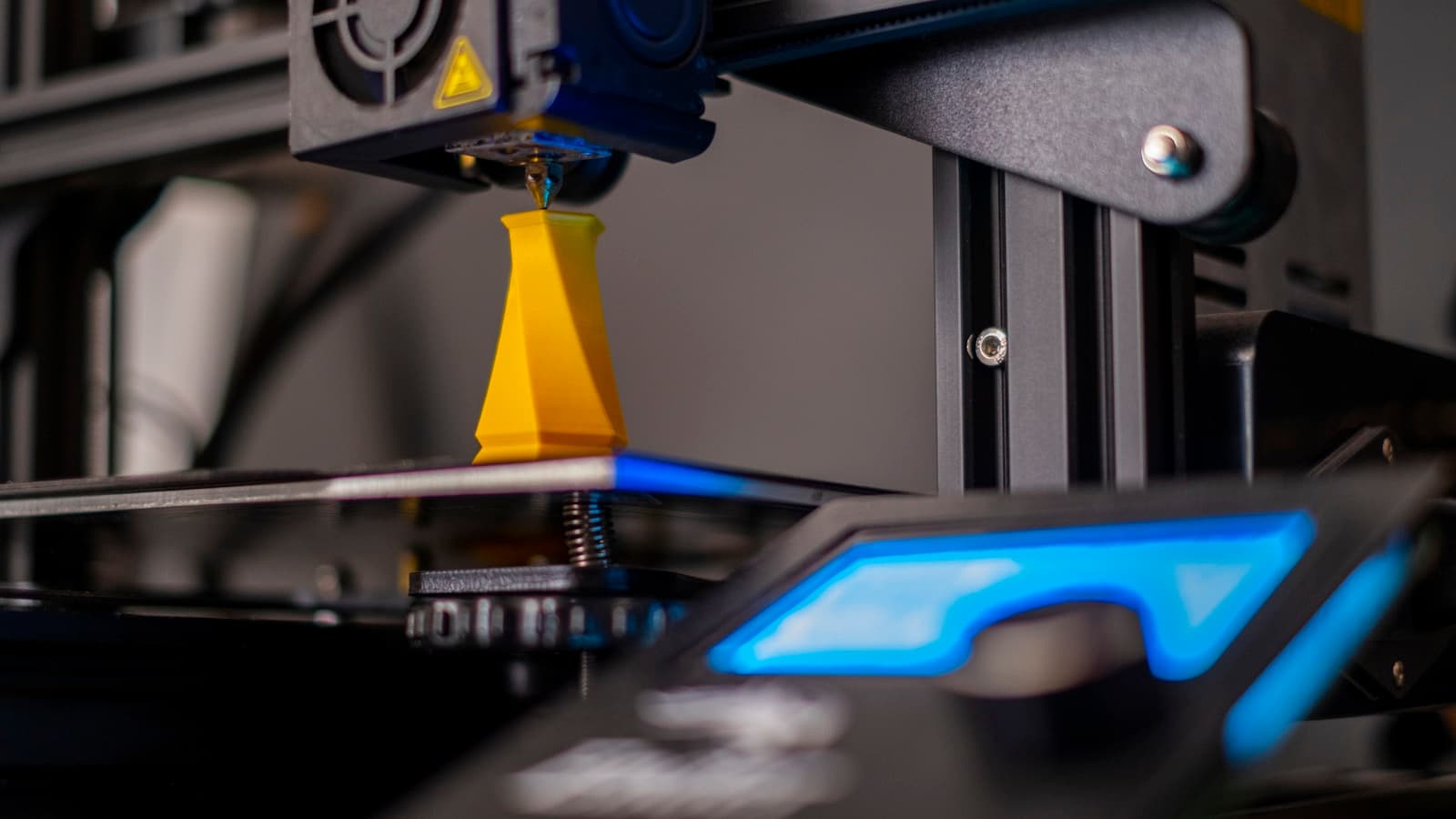
Entry-level FDM machines start around $200, which makes 3D printing look like a cheap hobby to get into. It isn't quite that simple: filament or resin, nozzles, and build plates keep costing money for as long as the printer runs, and most of that spending happens well after the purchase receipt is filed away. Because the printer itself is a single purchase rather than a recurring bill, this treats the price you enter as something to measure against a few months of spending room, not one paycheck.
Think of the printer's price tag as a down payment rather than the full bill. A modest habit of a spool or two a month adds up over a year, and that's before a nozzle clogs or a build plate needs replacing.
These key factors affect 3D printer affordability
Printer type and price tier
Entry-level FDM printers like the Creality Ender 3 series or Elegoo Neptune sit at $150 to $250 and print in plastic filament, which is where most first-time buyers land. Step up to a Bambu Lab A1 or Prusa MK4 and reliability jumps along with the price, typically $300 to $800, mostly thanks to auto-calibration and firmware that cuts down on failed prints. Multi-color or multi-material machines like the Bambu Lab X1 Carbon run $1,000 to $1,500. Resin printers built for miniatures and fine detail, like the Elegoo Saturn or Anycubic Mono, are actually cheaper to buy, $200 to $500 for a standard build volume, though they demand more in ventilation and cleanup than an FDM machine ever will.
Filament and resin costs
PLA is the forgiving, inexpensive default at $18 to $25 a kilogram. PETG and ABS cost a bit more, $20 to $30 a kg, in exchange for holding up better to heat and stress, and something like carbon-fiber-infused nylon or flexible TPU runs $30 to $60 a kg once you start chasing specific properties. Resin works on a different cost structure entirely: bottles run $25 to $45 a liter, and printing in resin also means budgeting for isopropyl alcohol to clean finished parts, nitrile gloves, and either a respirator or genuinely good ventilation, since uncured resin fumes aren't something to shrug off.
Consumables and maintenance
Nozzles are cheap individually, $2 to $10, but abrasive filaments chew through them fast enough that replacing one becomes routine rather than rare. A build plate typically lasts a year or two of regular use before it needs swapping, $20 to $40. Resin printers have their own wear part: the FEP film lining the vat is good for a limited number of prints before it needs replacing at $10 to $20, on top of the ongoing cleaning supplies resin work requires. Clogged nozzles and a bed that's drifted out of level are the two failures that eat the most time, not money, once a printer's past its first few months.
Enclosures, ventilation, and upgrades
An enclosure kit runs $50 to $150 and mostly earns its keep if you're printing ABS, which needs a stable, warm chamber to avoid warping. Printing resin indoors without an air filtration setup, another $50 to $150, is a bad idea given how uncured resin fumes smell and irritate. Beyond that, hardened nozzles for abrasive filament and auto bed-leveling sensors, $30 to $100 apiece, are the two upgrades almost everyone eventually buys once they know what they actually print.
How to use your results
- Enter the actual price of the printer you're considering, including any bundled starter filament or resin, not just a base model price you saw advertised.
- If your result shows tight room, consider starting with an entry-level FDM printer instead of a premium multi-color or resin model.
- Budget separately for the first few months of filament or resin so the ongoing cost doesn't catch you off guard after the purchase.
- Revisit your estimate if you're planning to add an enclosure, upgraded nozzles, or a resin curing station, since those can add meaningfully to the total outlay.
Ways to increase how much 3D printer you can afford
- Start with a proven mid-range FDM printer like a Bambu Lab A1 or Prusa Mini rather than jumping straight to a premium enclosed system.
- Watch for sales around Black Friday and Prime Day, when many printer makers discount 15 to 25 percent.
- Consider open-box or refurbished units sold directly by manufacturers, which often run 20 to 30 percent below retail.
- Buy generic-brand filament instead of name-brand once you know your printer's quirks; quality generic PLA can run $15 to $18 per kg.
- Skip the enclosure and advanced upgrades at first and add them only if a specific project needs them.
More tech & hobbies calculators
Peer comparison data
Bureau of Labor Statistics (median income by age), Experian (credit score by age)
Used by the “how you compare” figures in the sidebar, not by the costs on this page.
Every figure on this site, with its source and the date it was last verified
How you compare
Income
Credit score
Nothing added yet - add something to see your risk.