Want the occasional useful email?
New calculators, updated cost data, and the occasional money-saving guide. No account needed, and you can leave any time.
By Alex Diaz · How we calculate this
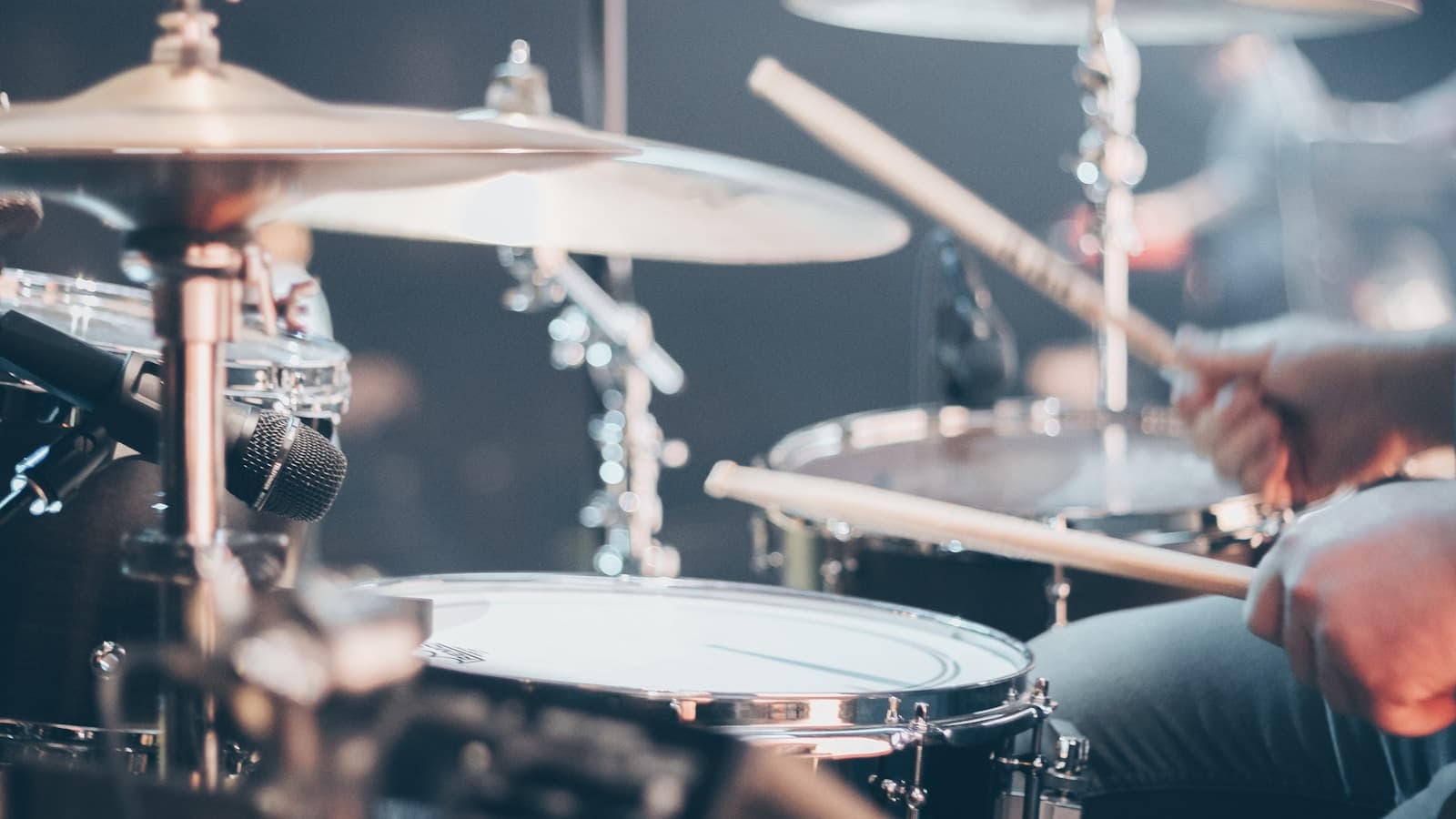
A shell pack's price tag almost never includes cymbals, which is the first surprise for anyone shopping a drum set for the first time. Budget kits ship with a starter cymbal pack worth maybe $150 to $300, and upgrading to something that actually sounds good adds hundreds more on top of whatever the kit itself cost.
Electronic kits solve two problems at once for a lot of buyers: they cost less at the entry level, and they let you practice through headphones instead of rattling the walls, which matters if you live in an apartment or share thin ones with anyone who values a quiet evening.
These key factors affect drum set affordability
Acoustic vs. electronic kits
A Pearl Roadshow or Ludwig Accent gets you into an acoustic kit for $400 to $700, hardware pack and throne included. Move up to a Tama Imperialstar or Pearl Export in the $700 to $1,200 range for noticeably better shells, and pro-level DW or Tama Starclassic kits start around $2,000 and climb past $5,000 from there.
Electronic kits follow their own ladder. An Alesis Nitro Mesh or Command kit starts at $350 to $500, mid-range mesh kits with better modules and pads (Roland TD-07, Alesis Command SE) run $800 to $1,500, and the Roland TD-27 or TD-50 kits serious home studios use push $2,500 to $5,000 or more. Pad feel has improved a lot over the last decade, but even a $5,000 electronic kit still feels different under the sticks than a well-tuned acoustic one, so the choice isn't purely about budget.
Cymbals are usually a separate line item
Most beginner kits ship with a cheap cymbal pack, hi-hats, crash, and ride, worth $150 to $300, and it sounds about like you'd expect. Zildjian A or Sabian AAX cymbals run $150 to $400 apiece, so a full 5-piece cymbal setup can land at $600 to $1,500 on its own - in some cases more than the shell pack it's sitting on top of.
Hardware, throne, and accessories
A comfortable throne runs $50 to $150. Most kits include basic stands, but double-braced hardware that won't wobble under a heavier player adds $200 to $400, and sticks, a practice pad, and a rug to keep the whole thing from sliding across the floor add another $50 to $100 combined.
Noise and space considerations
Acoustic drums are loud enough to be a real problem for neighbors or housemates, and quieting them down costs money: mesh head conversions run $100 to $300, and dampening the room with foam panels and door seals can add another $100 to $200 on top of that. This is the exact tradeoff that pushes a lot of apartment dwellers toward an electronic kit instead, since headphones make the noise problem disappear entirely.
Delivery and assembly
Kits typically arrive in several boxes and take an hour or two to put together, which most players handle themselves without much trouble. If you'd rather skip that, local music stores often deliver and assemble for $50 to $150, worth adding to the total if you're buying online instead of walking a kit out of a store already built.
How to use your results
- Add the realistic total, not just the shell pack price - include cymbals, a throne, and hardware if they aren't bundled in.
- If the result looks tight, check whether an electronic kit in a lower price tier would meet your needs just as well as an acoustic one.
- Factor in your living situation - a low affordability score paired with noise restrictions might point you toward an electronic kit regardless of budget.
- Recheck the estimate after adding delivery or assembly costs if you're not planning to set the kit up yourself.
Ways to increase how much you can afford to spend on a drum set
- Buy a shell pack alone and add cymbals and hardware gradually as your budget allows, rather than all at once.
- Shop used - drum kits hold up well mechanically and a well-cared-for used kit can save 30% to 50% off retail.
- Watch for seasonal sales; Black Friday, Guitar Center's annual sales, and end-of-year clearance events regularly discount kits 15% to 25%.
- Start with an electronic kit if noise or space is a constraint, since entry models cost less than a comparable acoustic setup once cymbals are factored in.
- Look for open-box or demo units at music stores, which are often discounted 10% to 20% with a full warranty still intact.
More tech & hobbies calculators
Peer comparison data
Bureau of Labor Statistics (median income by age), Experian (credit score by age)
Used by the “how you compare” figures in the sidebar, not by the costs on this page.
Every figure on this site, with its source and the date it was last verified
How you compare
Income
Credit score
Nothing added yet - add something to see your risk.