Want the occasional useful email?
New calculators, updated cost data, and the occasional money-saving guide. No account needed, and you can leave any time.
By Alex Diaz · How we calculate this
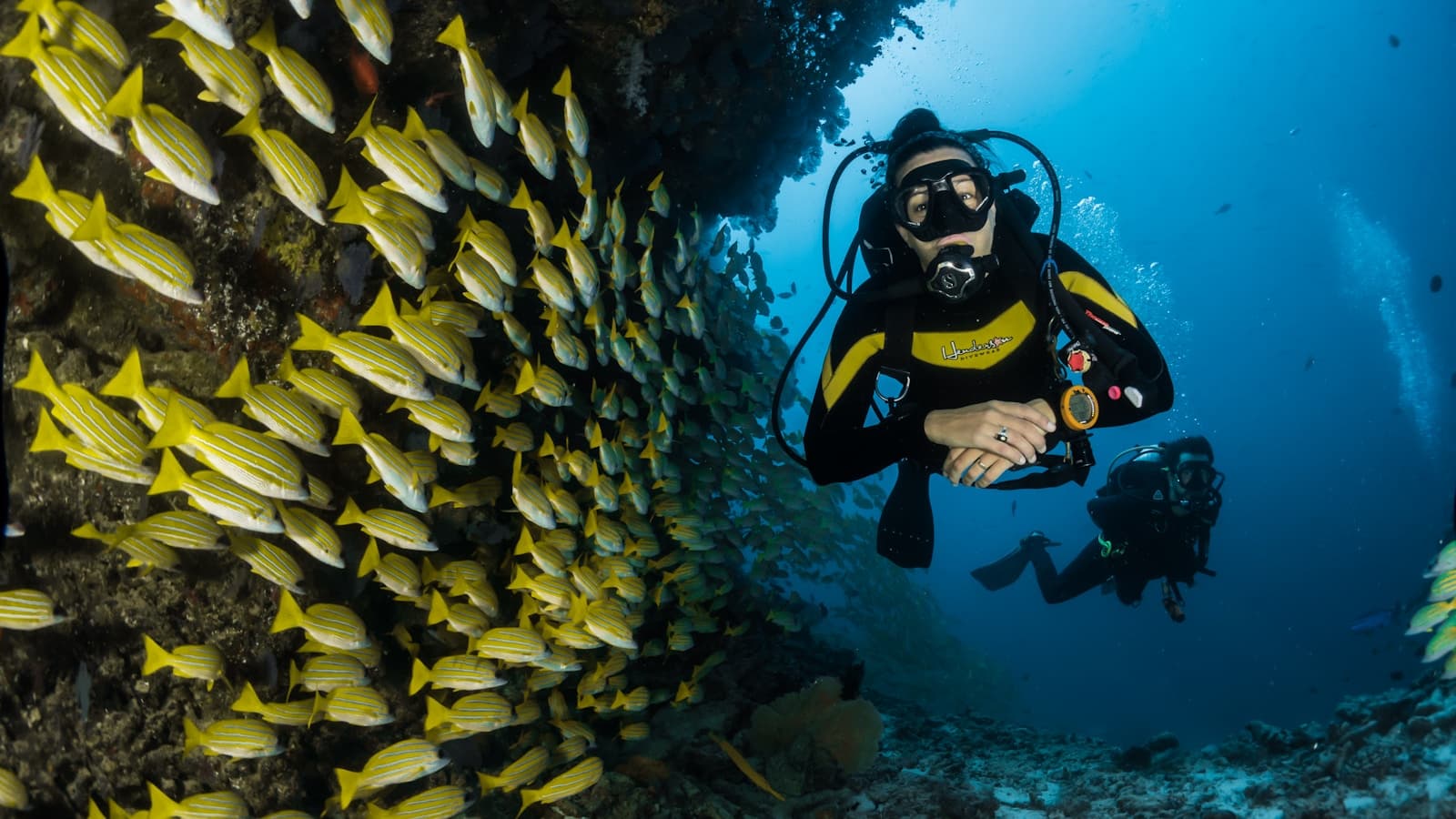
Renting a full kit for a single dive - mask, fins, BCD, regulator, tank - usually runs $50 to $100 a day at a dive shop, and for someone diving once or twice a year on vacation, that's simply cheaper than owning. Where owning starts to win is frequency: a diver logging a dozen or more dives a season stops handing rental fees to the shop and starts wishing their own gear actually fit.
These key factors affect scuba diving gear affordability
Core gear versus rental
Buying a mask, snorkel, fins, and a wetsuit or dive skin runs about $400 to $800 combined, and these are usually the first pieces a diver buys, since fit matters and a rental mask leaks more than a properly sized one ever should. The BCD and regulator are a bigger jump at $600 to $1,200 together, and plenty of divers rent those for years before committing, since an ill-fitting rental BCD is annoying, not dangerous, the way a leaky regulator would be.
Dive computer
A dive computer isn't optional gear the way a fancy fin might be. It tracks depth, time, and nitrogen absorption in real time, which is what keeps a diver from surfacing into decompression sickness instead of just guessing at dive tables. Reliable models run $250 to $600, and it's one of the few items on this list worth buying new instead of used, since a malfunctioning computer is a safety problem rather than a mere inconvenience.
Certification and training costs
Nobody gets to just buy a tank of air and jump in - a PADI or NAUI Open Water certification is the prerequisite, and it typically runs $300 to $600 for classroom time, pool sessions, and a handful of supervised open-water dives. It's easy to forget when budgeting for gear, since the money goes to a dive shop or instructor rather than a retailer, but it's a real cost that comes before any of the equipment does.
Tank and weight rental versus ownership
Tanks and weights are the one part of a scuba kit almost nobody owns, since they're heavy, airlines won't fly a filled tank through cargo, and shops rent them for $15 to $40 a day anyway.
How to use your results
- Separate certification costs from gear costs in your budget, since Open Water certification is usually a one-time $300 to $600 expense on top of equipment.
- Check whether tanks and weights are rented locally before including them in your purchase total, since most divers rent these.
- Prioritize a properly fitted mask and dive computer, since fit and reliability matter more for these than for other gear.
- Recheck your total if buying gear before a specific trip, since rental gear may be cheaper for a one-time or infrequent diver.
Ways to increase how much scuba diving gear you can afford
- Rent a BCD and regulator for your first few dives instead of buying, since these are the priciest components and rental proves out your interest first.
- Buy previous-model-year gear from dive shops during seasonal sales, which is commonly discounted 20% to 30%.
- Buy a mask, snorkel, and fins first, the cheapest core items, and phase in the BCD and regulator once you're diving regularly.
- Look for certification-plus-gear package deals from dive shops, which often bundle a discount on both.
More tech & hobbies calculators
Peer comparison data
Bureau of Labor Statistics (median income by age), Experian (credit score by age)
Used by the “how you compare” figures in the sidebar, not by the costs on this page.
Every figure on this site, with its source and the date it was last verified
How you compare
Income
Credit score
Nothing added yet - add something to see your risk.