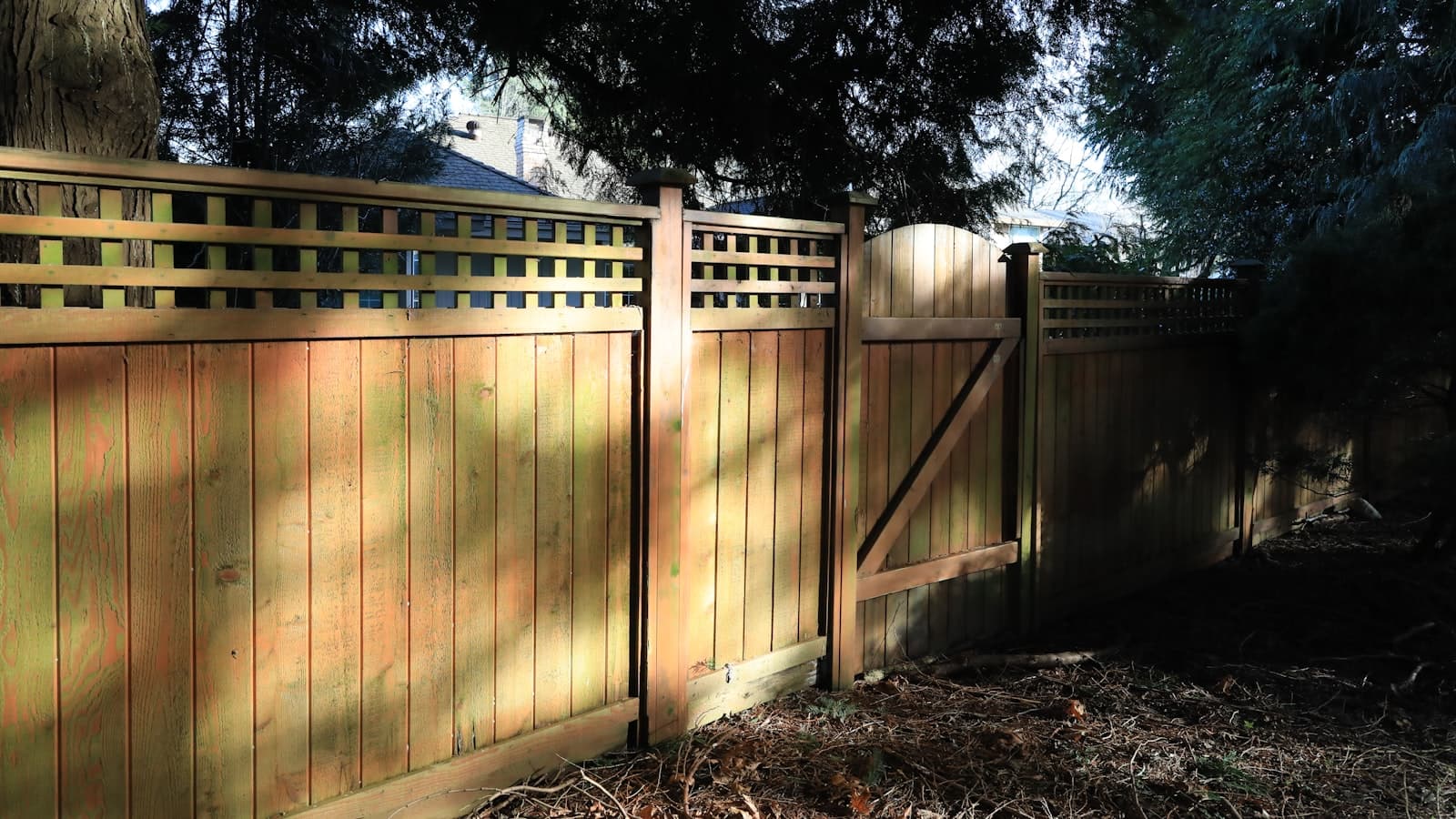
A fence is usually a one-time project rather than an ongoing cost, so this calculator sizes the total price against roughly three months of your budget instead of treating it like a monthly bill. Property lines matter more here than with most home projects, since a fence built even a little over the line can turn into a dispute with a neighbor, so it's worth confirming your boundaries before getting quotes.
These key factors affect fence affordability
Income and expenses
As with any project like this, the total fence cost matters less on its own than what it leaves in your budget once your regular bills and existing debt are accounted for.
Material and length
Chain-link stays the cheapest option per linear foot by a wide margin, wood and vinyl sit in the middle, and masonry or wrought iron sit well above both. Because pricing is quoted per foot, the total perimeter you're enclosing usually drives the bottom line more than any single design choice, and corner posts, gates, or a sloped yard that needs stepped panels can push a quote higher than a flat per-foot estimate suggests.
Installation and permits
DIY can meaningfully cut labor costs on a simpler fence, though taller fences, masonry, and any post holes near buried utility lines are usually worth leaving to a professional - calling 811 before digging is free nationwide and can prevent an expensive mistake. Many municipalities also cap fence height, often around 6 feet in backyards and lower toward the street, and may require a permit or HOA sign-off, so it's worth checking local rules before the budget is set rather than after.
How to use your results
- Measure the actual perimeter you need fenced rather than guessing a round number.
- Check local permit or HOA requirements before finalizing a budget.
- Include your existing debt for a realistic picture of what's actually left to spend.
Ways to lower the cost of a fence
- Compare materials - chain-link or basic wood costs much less than vinyl or wrought iron.
- Handle simpler installation yourself to cut labor costs.
- Get multiple contractor quotes, since fencing prices vary a lot by installer.
More home improvement calculators
Sources
Bureau of Labor Statistics (median income by age, shown in the sidebar), Experian (credit score by age, shown in the sidebar) - starting points to compare against, not real-time quotes.
Nothing added yet - add something to see your risk.