Want the occasional useful email?
New calculators, updated cost data, and the occasional money-saving guide. No account needed, and you can leave any time.
By Alex Diaz · How we calculate this
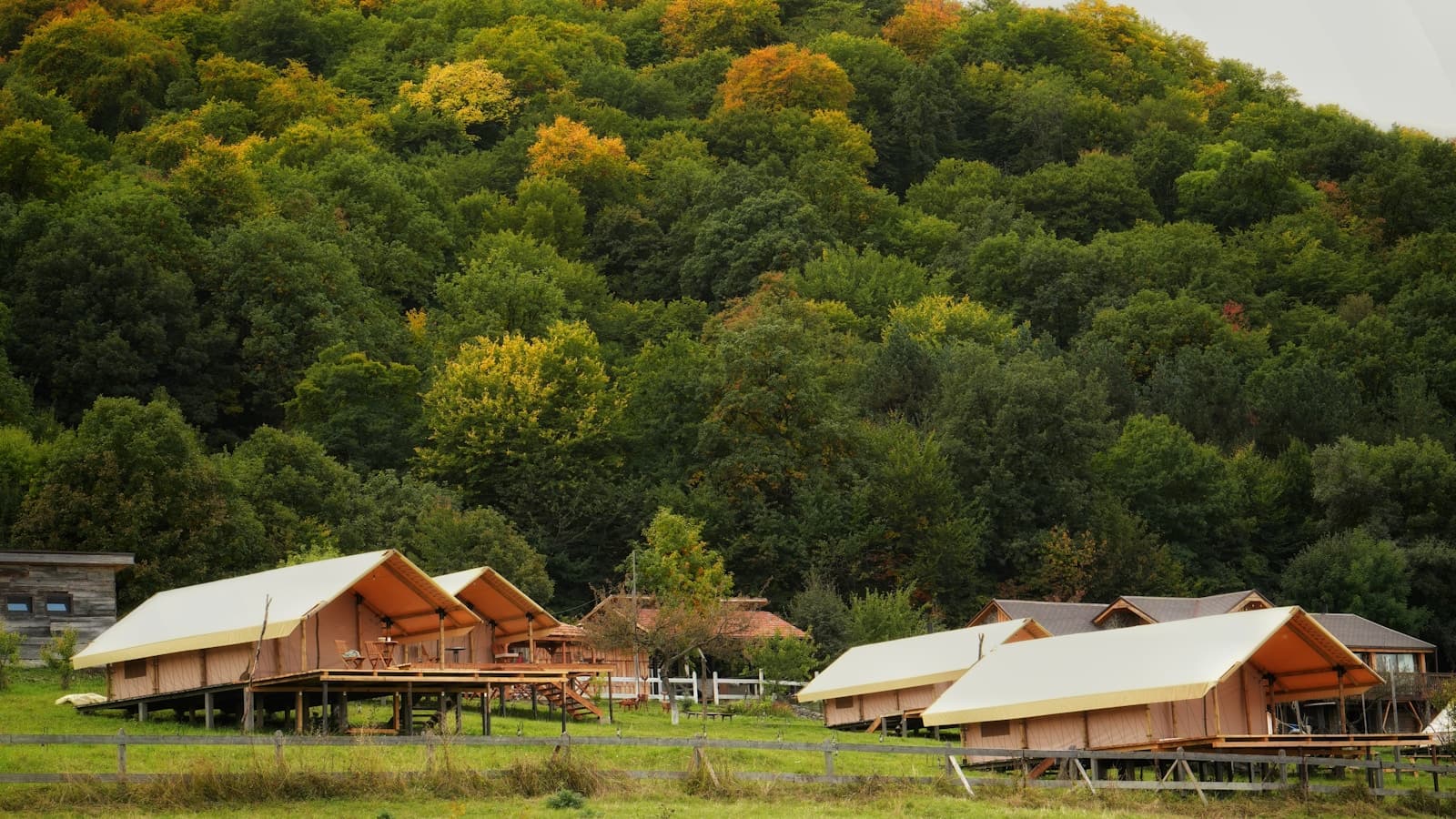
Glamping accommodations, safari tents, yurts, converted airstreams, typically run $150 to $400 a night. That's several times the cost of a standard campsite, but you're paying for real beds, electricity, and often a private bathroom, not just a nicer view. Because glamping is a one-time trip cost, your estimate weighs the total you enter against roughly three months of your budget rather than a single month's income.
These key factors affect glamping affordability
The accommodation itself carries most of the premium
A furnished yurt, safari tent, or tiny cabin at a glamping resort typically runs $150 to $400 a night, compared to $20 to $50 for a standard tent campsite in the same area. That gap reflects real beds, electricity, and often a private bathroom, not the raw cost of the land or the location. In effect, you're paying boutique-hotel rates for a structure that still has canvas walls.
Included amenities can offset some of the higher nightly rate
Many glamping properties bundle in perks like a private fire pit, heating or air conditioning, breakfast, or a communal hot tub, all things that would be separate expenses on a traditional camping trip. Before assuming a listing is overpriced, check what's actually included against the nightly rate. Two properties charging the same amount a night can be very different values depending on what's bundled in.
Popular sites book up fast and charge more on weekends
Well-known glamping brands and unique properties often sell out two to three months in advance for peak-season weekends. Nightly rates on Friday and Saturday can also run 20 to 30 percent higher than midweek stays at the same location, so a Sunday-through-Wednesday stretch is one of the simplest ways to get the same tent for noticeably less.
How to use your results
- A low risk score means the trip fits comfortably within a normal few months of spending
- A higher score suggests the property you chose sits closer to boutique-hotel pricing than to camping, so compare a few alternatives before booking
- Check what's actually included in the nightly rate, since breakfast or a hot tub can make a pricier option a better overall value
- Book midweek if your schedule allows, since weekend rates at popular glamping sites run noticeably higher
Ways to make glamping more affordable
- Book a midweek stay instead of a weekend to take advantage of lower nightly rates
- Compare a few glamping properties on what's included, since some bundle breakfast or amenities that offset the higher price
- Travel in the shoulder season just outside peak summer or fall weekends when demand and pricing both ease off
- Choose a smaller independent glamping site over a well-known branded resort, which often charges a premium for the name
- Bring your own food for some meals even if the site has a restaurant, to keep daily costs closer to a traditional camping trip
More travel calculators
Peer comparison data
Bureau of Labor Statistics (median income by age), Experian (credit score by age)
Used by the “how you compare” figures in the sidebar, not by the costs on this page.
Every figure on this site, with its source and the date it was last verified
How you compare
Income
Credit score
Nothing added yet - add something to see your risk.