Want the occasional useful email?
New calculators, updated cost data, and the occasional money-saving guide. No account needed, and you can leave any time.
By Alex Diaz · How we calculate this
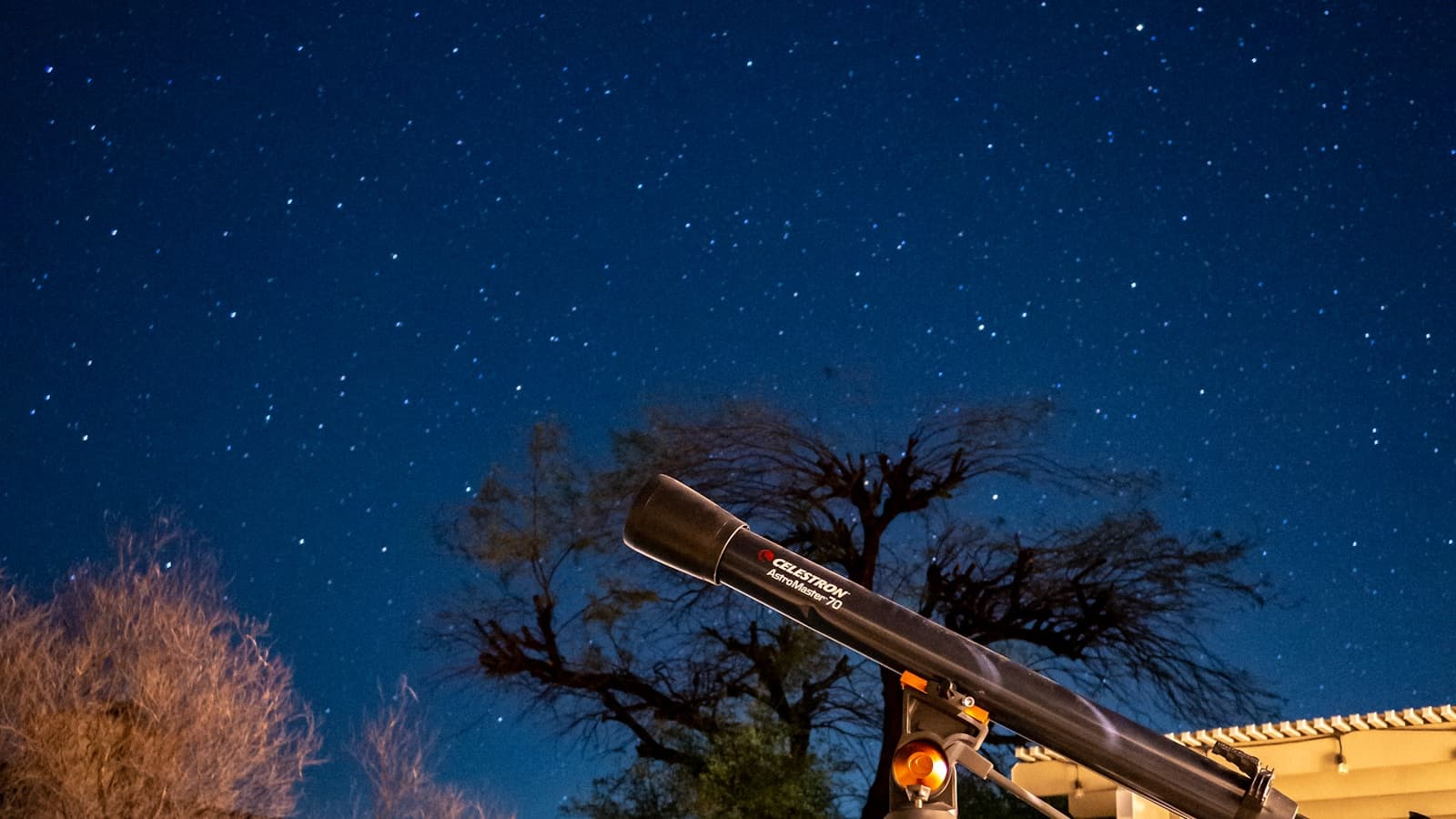
Aperture, the diameter of the main lens or mirror, decides more about a telescope's usefulness than any other spec on the box. A wider aperture pulls in more light and shows fainter objects no matter how much you crank the magnification, which is why two scopes with the same zoom number can produce wildly different views of the same patch of sky.
These key factors affect telescope affordability
Telescope type and aperture
A basic tabletop reflector starts around $150 to $300 and is genuinely capable as a first telescope. Step up to a mid-range Dobsonian or refractor with a 6 to 8 inch aperture and the price moves to $400 to $900. Go further into a computerized go-to mount paired with a larger aperture and you're looking at $1,000 to $3,000 or more, at which point the mount is doing nearly as much of the work as the optics.
Mount type matters as much as the optics
A wobbly alt-azimuth mount can ruin the experience of an otherwise good telescope, since every bump throws whatever you were tracking right out of view. Equatorial and computerized go-to mounts fix that by tracking the sky's motion on their own, but that convenience adds $200 to $800 on top of the optics themselves.
Eyepieces and accessories
Most telescopes ship with just one or two basic eyepieces, fine for a first look but limiting after that. A useful second set - one wide-field, one high-power - runs $100 to $300, and that's before a moon filter or a better finder scope gets added to the cart.
Portability and storage
Sky glow from nearby streetlights and buildings caps how much detail any telescope can pull out of the eyepiece, regardless of how much you paid for it. Someone stargazing from a rural backyard gets real use out of a modest reflector that would show almost nothing from a downtown balcony. A bigger aperture is also heavier and more of a hassle to haul outside, which quietly determines how often the thing gets used at all.
How to use your results
- Budget separately for eyepieces and accessories, since a telescope's stock eyepieces are usually limited.
- Weigh aperture size against portability, since a bigger scope that's too heavy to set up often gets used less.
- Consider a computerized mount if you're new to astronomy, since manually finding objects has a real learning curve.
- Check local light pollution levels before buying, since a premium telescope in a bright city sees far fewer objects than a modest one under dark skies.
Ways to increase how much telescope you can afford
- Start with a quality Dobsonian, which delivers the most aperture per dollar without motorized mount costs.
- Buy a used telescope from an astronomy club or online marketplace, where good optics often sell for 40% to 50% below retail.
- Skip a computerized GoTo mount initially and learn manual star-hopping, saving several hundred dollars.
- Add eyepieces gradually rather than buying a full accessory kit upfront.
More tech & hobbies calculators
Peer comparison data
Bureau of Labor Statistics (median income by age), Experian (credit score by age)
Used by the “how you compare” figures in the sidebar, not by the costs on this page.
Every figure on this site, with its source and the date it was last verified
How you compare
Income
Credit score
Nothing added yet - add something to see your risk.