Want the occasional useful email?
New calculators, updated cost data, and the occasional money-saving guide. No account needed, and you can leave any time.
By Alex Diaz · How we calculate this
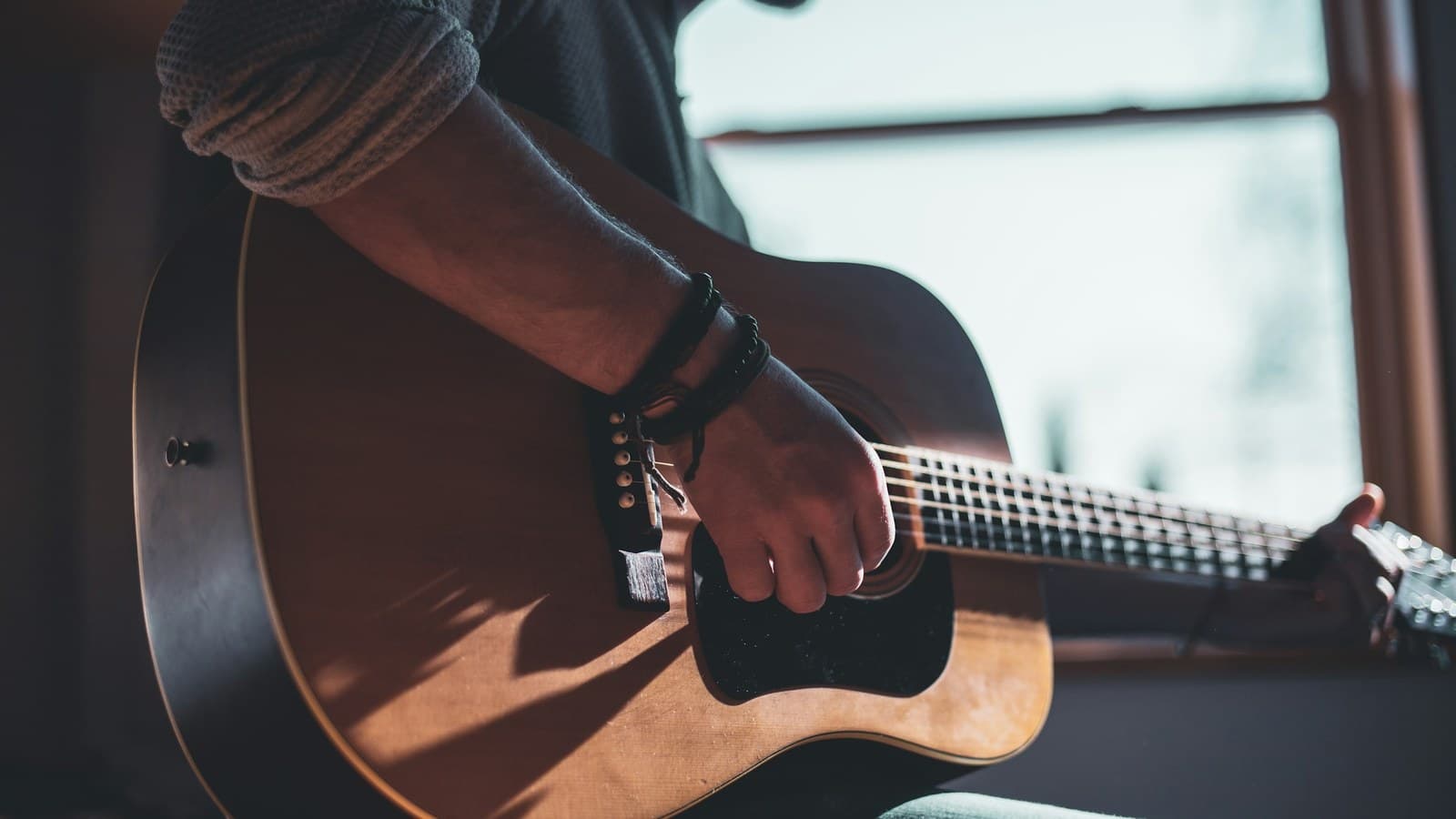
Guitar prices span an enormous range, from a $150 beginner acoustic to a $3,000-plus instrument built by a small professional shop, and where you land depends on how seriously you plan to play. Electric guitars complicate that math since the sticker price on the guitar itself isn't the finish line; an amp is not optional if you want to hear more than an unplugged buzz, and a cable, strap, and a handful of picks are needed just to plug in. Because this is a one-time purchase, your estimate weighs the total you enter against roughly three months of your budget rather than a single month's income.
These key factors affect guitar affordability
Acoustic versus electric
Beginner acoustic guitars from brands like Yamaha or Fender run $150 to $300 and are a complete, playable package straight out of the case. Step up to a mid-range acoustic with a solid wood top, which resonates and ages better than a laminate top, and you're looking at $400 to $800. Professional-grade instruments from makers like Martin or Taylor run $1,500 to $4,000 or more.
Electric guitars follow roughly the same tiers ($200-400 beginner, $600-1,200 mid-range, $1,800-plus professional), but the guitar alone is only half the purchase since it needs an amplifier to be heard at any real volume.
Amplifiers
A basic practice amp for a bedroom or small apartment runs $80 to $150, while a mid-size combo amp with better tone-shaping and enough headroom for a small gig lands at $250 to $500. Serious gigging amps and tube amps climb to $600-1,500, and amp modelers or multi-effects units, which digitally emulate dozens of amps and effects in one box, offer a cheaper alternative at $200-600 with none of the tube maintenance. It's an easy line item to leave out when pricing 'a guitar,' but skip it and an electric guitar is essentially unplayable beyond headphone volume.
Cases and accessories
A padded gig bag runs $30 to $60, a hard case with real protection $80 to $200. Add a clip-on tuner ($15-30), a set of replacement strings ($8-20), and cables, picks, and a strap ($30-50 together), and a reasonable starter accessory budget lands around $100 to $150. For a solid-wood acoustic, it's also worth budgeting $15-30 for a case humidifier: most manufacturers recommend keeping the guitar between 45% and 55% relative humidity, and letting it dry out much below that can crack the top or back seams, a repair that costs far more than the humidifier would have.
Lessons and learning resources
In-person lessons typically run $30 to $60 per half-hour session, or $120-240 a month at a weekly cadence. App-based platforms and online lesson libraries run $10-25 a month, a lower-cost way to build fundamentals before committing to a pricier instrument. Spending a bit more on lessons alongside a modest guitar tends to produce a better player, faster, than pouring the entire budget into a premium instrument with no instruction behind it.
Used and vintage market
A well-maintained used guitar from a reputable brand typically sells for 40-60% of retail and plays just as well as new, since guitars, unlike a lot of gear, don't really wear out with normal use. Vintage instruments from sought-after eras are the exception: collectors can push their prices well above original retail, so 'vintage' isn't automatically the budget option it sounds like.
How to use your results
- If you're buying electric, include an amp and cable in your total price rather than pricing the guitar alone.
- If your result shows high risk, a quality beginner or mid-range instrument ($200-500) is a reasonable starting point rather than a compromise.
- Budget roughly $100-150 for essential accessories (case, tuner, strings, strap) on top of the instrument price.
- Consider setting aside part of your budget for a few lessons rather than putting the full amount into the guitar itself.
Ways to increase how much guitar you can afford
- Buy used from a reputable shop or marketplace to get 40-60% more instrument for the same money.
- Start with a modeling amp or multi-effects unit instead of a traditional tube amp to save $200-500 while still getting varied tones.
- Choose a mid-tier instrument from an established brand's budget line (like Fender Squier or Gibson Epiphone) instead of the flagship model; build quality is often very close for 40-60% less.
- Buy strings, picks, and cables in bulk or during sales, since these routine costs add up over a year of playing.
- Trade in or sell a guitar you've outgrown toward a better instrument rather than keeping both.
More tech & hobbies calculators
Peer comparison data
Bureau of Labor Statistics (median income by age), Experian (credit score by age)
Used by the “how you compare” figures in the sidebar, not by the costs on this page.
Every figure on this site, with its source and the date it was last verified
How you compare
Income
Credit score
Nothing added yet - add something to see your risk.