Want the occasional useful email?
New calculators, updated cost data, and the occasional money-saving guide. No account needed, and you can leave any time.
By Alex Diaz · How we calculate this
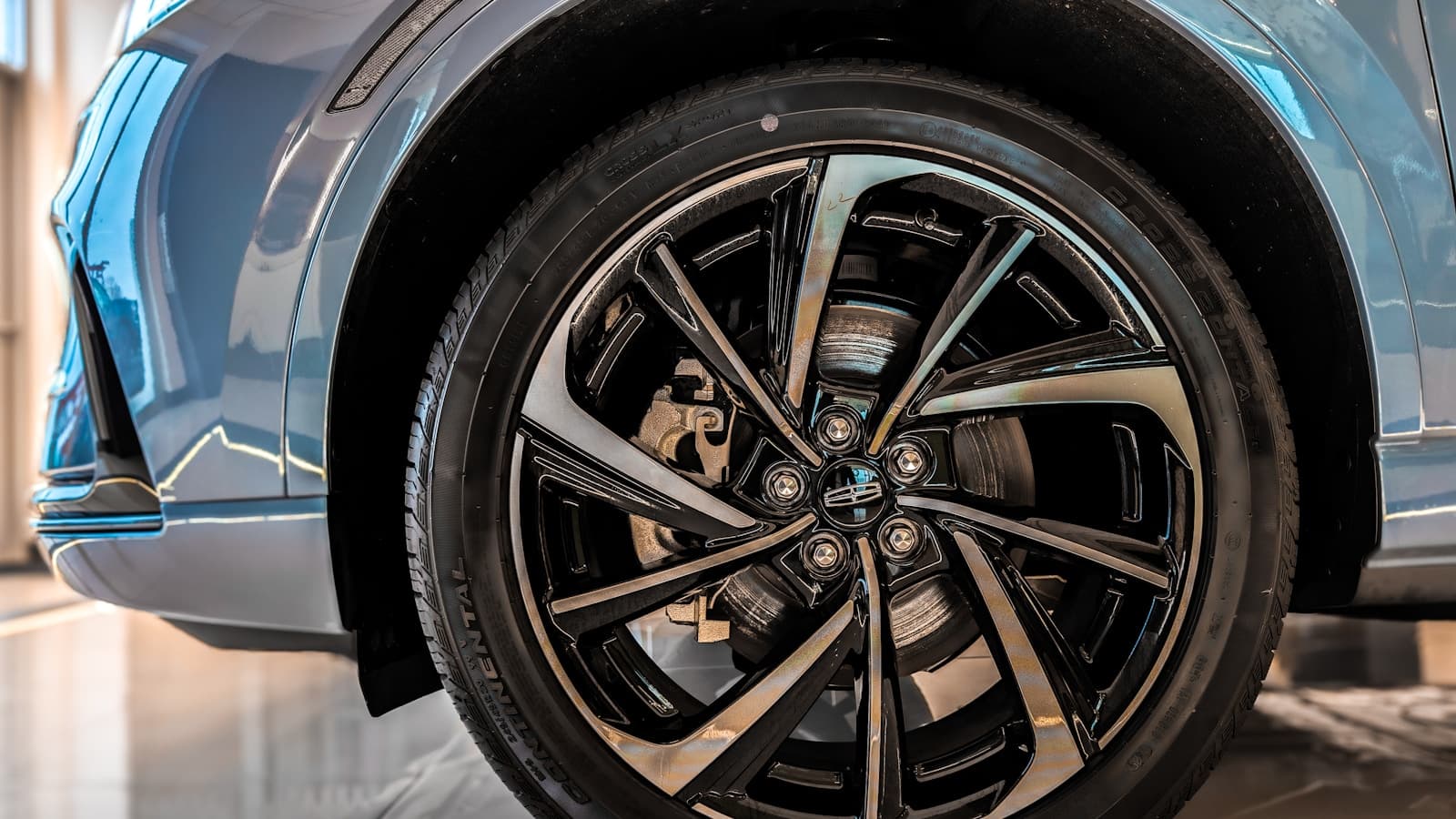
Tire shops generally recommend replacement once tread wears down to 2/32 of an inch - the legal minimum in most states and roughly the point where wet-weather braking distance starts stretching out noticeably. Rims are a separate decision entirely, usually driven by style or curb damage rather than safety, which is why it's worth pricing the two apart before assuming you need both at once.
These key factors affect new rims and tires affordability
Tire quality tier
Budget all-season tires run $80-$150 each. Step up to a name brand like Michelin or Bridgestone and you're at $150-$250 each. Performance or off-road tires can clear $300 apiece, so a full set of four spans roughly $320 on the low end to well over $1,200 before a single rim enters the picture.
Rim material and size
Steel wheels are the budget option at $300-$600 for a set of four, and aftermarket alloys typically run $800-$2,000. Going up in diameter - 18 inches and beyond - or choosing forged wheels pushes the price higher still, and it drags tire cost up right along with it, since larger wheels need lower-profile tires that cost more per tire.
Installation and extras
Mounting, balancing, and disposal fees usually run $20-$40 per tire. Change the wheel diameter and you may also need the TPMS sensors reset or replaced outright, another $50-$100, and it's a line item that catches people off guard because nobody mentions it until the invoice. One more thing worth knowing: sizing tires meaningfully off factory spec can throw off your speedometer and odometer accuracy, since both are calibrated to the original tire's rolling diameter.
How to use your results
- If the total is too risky, price out rims and tires separately - buying quality tires on your factory-stock steel or alloy wheels is often far cheaper than upgrading both at once.
- Check whether your current tires simply need replacing (routine) versus rims that are bent or cracked, which is less optional and changes how much you can shop around.
- Ask shops about price-matching or manufacturer rebates, which are common during spring and fall tire changeover seasons.
Ways to make new rims and tires more affordable
- Buy tires online through a retailer like Tire Rack or Discount Tire and have them shipped to a local installer, which is often cheaper than buying in-store.
- Stick with your factory wheel size instead of upsizing - larger wheels need larger, pricier tires and are more prone to curb damage.
- Watch for tire manufacturer rebate periods in spring and fall, which can knock $50-$100 off a set of four.
- Consider quality used or take-off wheels if your factory rims are undamaged and you just need a style refresh.
More vehicles calculators
Peer comparison data
Bureau of Labor Statistics (median income by age), Experian (credit score by age)
Used by the “how you compare” figures in the sidebar, not by the costs on this page.
Every figure on this site, with its source and the date it was last verified
How you compare
Income
Credit score
Nothing added yet - add something to see your risk.