Want the occasional useful email?
New calculators, updated cost data, and the occasional money-saving guide. No account needed, and you can leave any time.
By Alex Diaz · How we calculate this
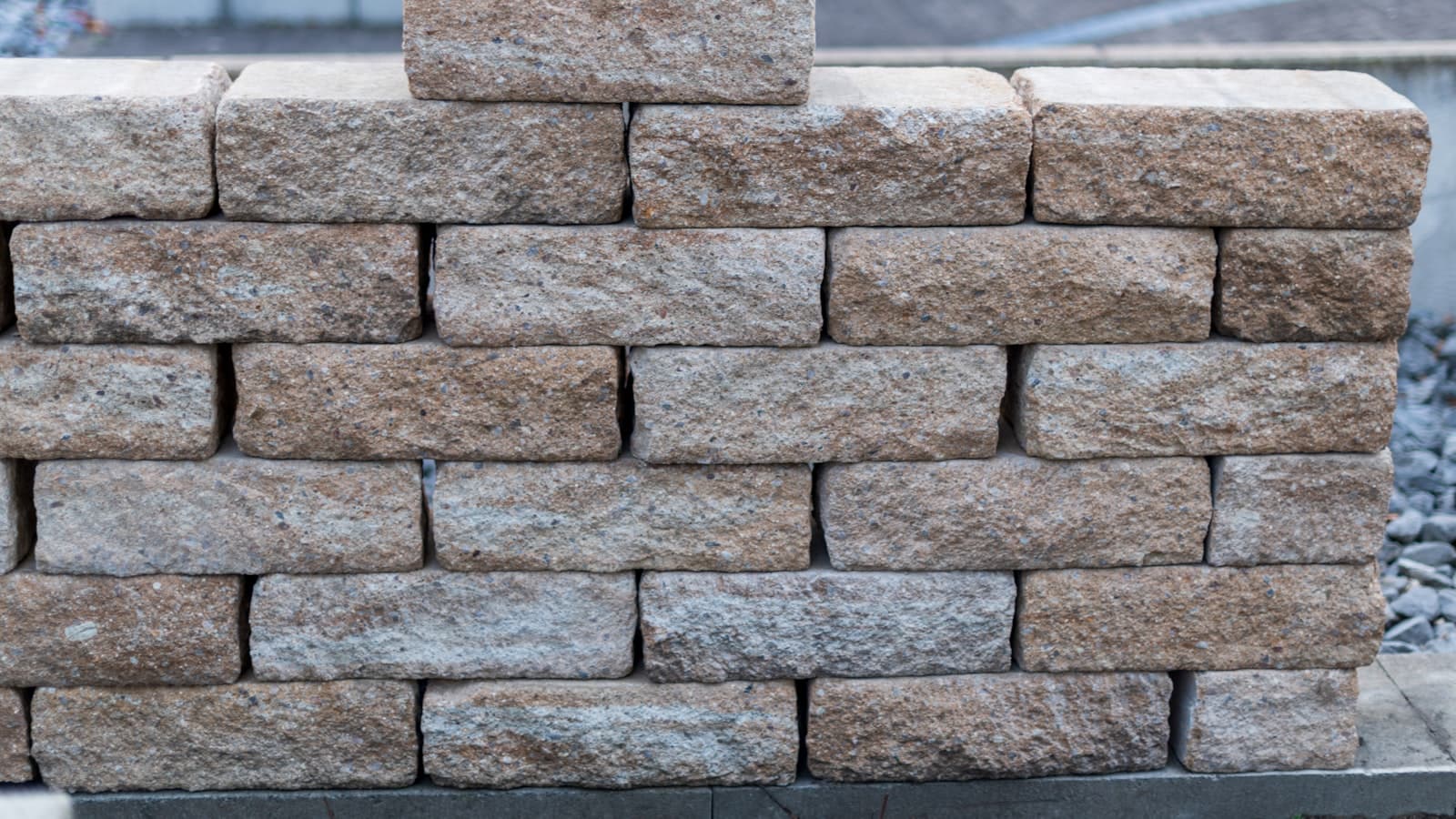
A short decorative wall costs far less than a taller one, since most codes require an engineered design and a permit once a wall crosses roughly 3 to 4 feet, and that same requirement often applies at any height if the wall sits near a property line or has to carry a driveway or structure above it. A retaining wall is a one-time cost, not a recurring bill, so this estimate sizes the total up against roughly three months of your budget rather than a monthly payment.
These key factors affect retaining wall costs
Income and expenses
Retaining walls often get built because a slope is already eroding or a wall is already failing, not because someone simply wants one, so the bill can land at an inconvenient time no matter what else is going on financially. What matters is how much of your income is already claimed by rent or a mortgage, a car payment, and any other debt before this cost shows up, not the project total sitting on its own.
Wall height and engineering
A wall under about 3 to 4 feet can often go in as a straightforward landscaping job, but once it crosses that threshold, most jurisdictions require a stamped engineering design and a permit, since the wall now has to resist ongoing soil pressure rather than just hold back a few inches of mulch. That same requirement can kick in at any height if the wall sits close to a property line or has to carry the weight of a driveway, patio, or structure above it, since the added load changes the engineering.
Material choice
Concrete block, natural stone, and timber land at different price points, and the cheapest option upfront isn't necessarily the cheapest one over time. Timber walls are usually the least expensive to build but commonly need replacing within 10 to 20 years as the wood rots or leans, while poured concrete and stone can last 50 years or more with proper drainage, so it's worth weighing material cost against how often you'd realistically be rebuilding.
Drainage
Proper drainage, usually a gravel backfill layer and a perforated pipe or weep holes behind the wall, is what actually keeps a wall standing over time, since it relieves the hydrostatic pressure that builds up in saturated soil. Skipping it to save money upfront is one of the most common reasons a wall bulges, cracks, or fails outright, and in colder climates, water trapped behind the wall that freezes and thaws can push it out of alignment even faster.
How to use your results
- Get a quote based on your actual wall height, since taller walls scale in cost quickly.
- Confirm drainage is included in the quote, not treated as a separate add-on.
Ways to make a retaining wall more affordable
- Get quotes from multiple contractors, since bids for the same scope can vary substantially.
- Choose concrete block over natural stone if upfront cost matters more than appearance.
- Don't skip drainage to save money upfront - it's cheaper than rebuilding a failed wall later.
More home improvement calculators
Peer comparison data
Bureau of Labor Statistics (median income by age), Experian (credit score by age)
Used by the “how you compare” figures in the sidebar, not by the costs on this page.
Every figure on this site, with its source and the date it was last verified
How you compare
Income
Credit score
Nothing added yet - add something to see your risk.