Want the occasional useful email?
New calculators, updated cost data, and the occasional money-saving guide. No account needed, and you can leave any time.
By Alex Diaz · How we calculate this
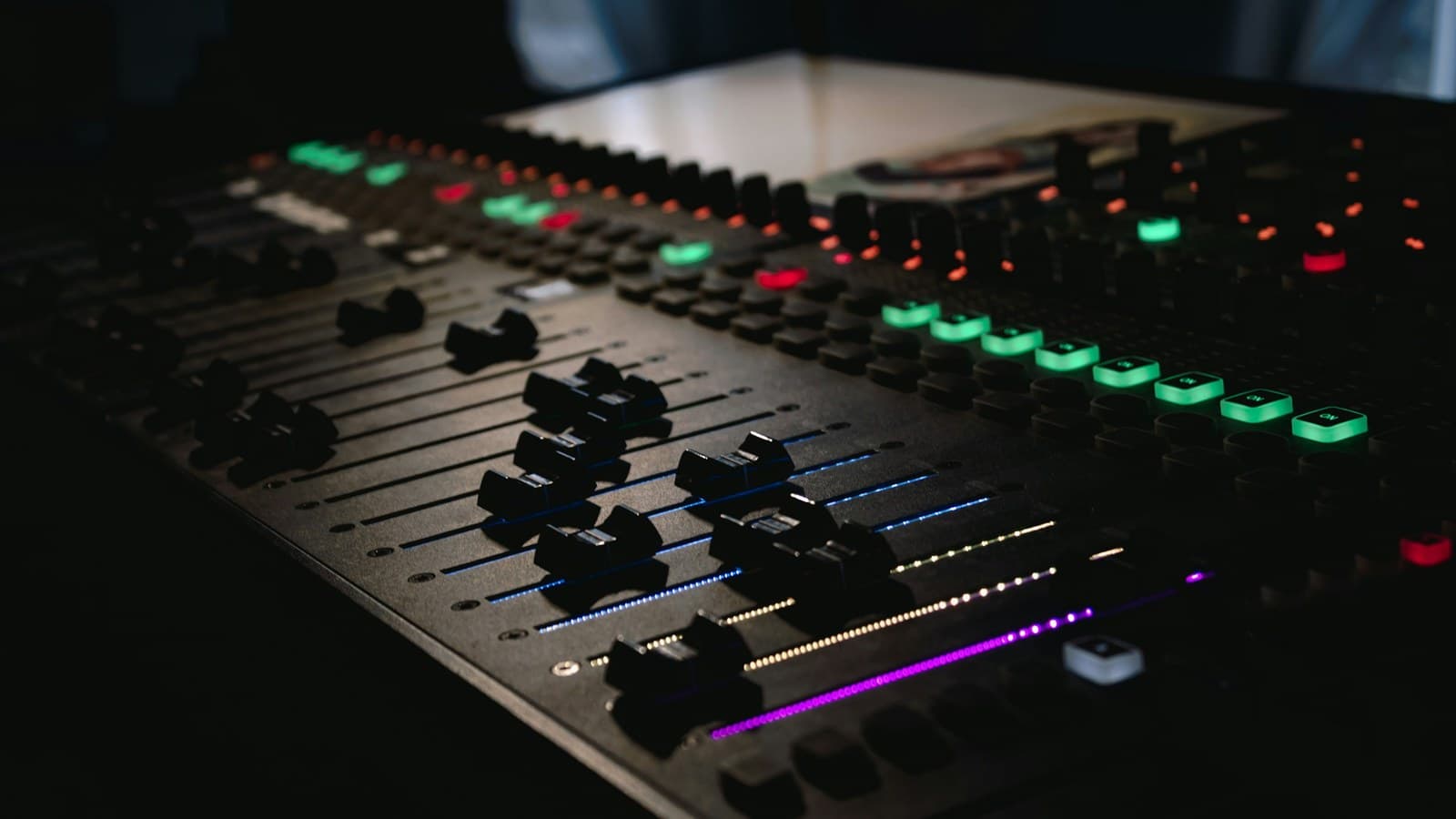
A cheap microphone in a treated room usually beats an expensive one in an untreated room, which surprises most people building their first setup. Interface, mic, monitors or headphones, treatment, and software are five separate purchases with five separate price ladders, and it's easy to underestimate how they add up.
A usable starter setup runs $500 to $800. A studio someone would actually mix a real release on runs $3,000 to $6,000 or more, and the gap between those two numbers is almost entirely acoustic treatment and microphone quality, not the interface.
These key factors affect home recording studio affordability
Audio interface
A two-input interface like a Focusrite Scarlett Solo or 2i2 runs $150-230 and covers most solo vocal or instrument work without issue. Move up to four or eight inputs for a full band or a drum kit and pricing shifts to $400-900. Interfaces with premium preamps at $1,000-2,000 exist mainly for people billing studio clients, not for someone recording in a spare bedroom.
Microphones
A Shure SM57 or SM58, the default workhorse dynamic mics on most stages and in most studios, run $100-140 and handle vocals, guitar cabs, and drums without complaint. A large-diaphragm condenser for vocals and acoustic instruments starts around $150-400, and stepping up to something like a Shure SM7B or a Neumann-tier mic runs $400-1,200 or more.
Most people only need one or two mics to get started; it's usually drum overheads or a full band session that pushes the mic budget past $500.
Monitors and headphones
Entry-level studio monitors run $200-350 a pair, and well-regarded mid-range options like the Yamaha HS5 or KRK Rokit land at $300-600. Closed-back headphones for late-night tracking or mixing without waking the house run $100-250. Most home studios end up owning both, since headphones and monitors expose different problems in a mix, and skipping one usually means missing something the other would have caught.
Acoustic treatment
Foam panels and corner bass traps that tame reflections inside the room run $250-550 total, and building fabric-wrapped panels instead of buying pre-made ones cuts that close to in half. That's acoustic treatment, though, not soundproofing, one shapes how the room sounds and the other stops sound from leaving it.
Real soundproofing, decoupled walls, mass-loaded vinyl, a solid-core door, costs far more than foam and is the part almost everyone skips, even though good monitors in an untreated room will sound worse than budget gear in a treated one.
DAW software and plugins
GarageBand is free and genuinely capable for most home recording. Reaper's license is a one-time $60, Ableton Live and Logic Pro run $200-300 as one-time purchases (Logic is Mac-only), and Pro Tools is subscription-only at $10-30 a month. Plugins are where budgets quietly get away from people: individual ones range from free to $50-300 each, and it's not unusual to spend more on software over a year than on the hardware that started the whole project.
How to use your results
- Add up interface, mic, monitors or headphones, treatment, and software separately before entering a total, since it's easy to underestimate one category.
- If your result shows high risk, a $500-800 starter bundle (interface, one mic, headphones) still produces usable recordings while you save toward the rest.
- Treat acoustic treatment as part of the core budget rather than an optional add-on, since it affects how good everything else sounds.
- Re-run the estimate after pricing a specific bundle, since interface and monitor manufacturers often sell studio-in-a-box packages that cost less than buying each piece separately.
Ways to increase how much home recording studio you can afford
- Start with a free DAW like GarageBand or Reaper's low-cost license instead of a subscription DAW, saving $150-350 in year one.
- Build DIY acoustic panels instead of buying pre-made ones to cut treatment costs by 40-50%.
- Buy an interface/mic/headphone bundle pack instead of separate components, which are often priced 15-25% below buying each piece individually.
- Use quality closed-back headphones instead of studio monitors when starting out, deferring $300-600 in monitor costs until the rest of the setup is in place.
- Phase the purchase: get recording with the essentials first, then add extra mics, plugins, and treatment over the following months as budget allows.
More tech & hobbies calculators
Peer comparison data
Bureau of Labor Statistics (median income by age), Experian (credit score by age)
Used by the “how you compare” figures in the sidebar, not by the costs on this page.
Every figure on this site, with its source and the date it was last verified
How you compare
Income
Credit score
Nothing added yet - add something to see your risk.