Want the occasional useful email?
New calculators, updated cost data, and the occasional money-saving guide. No account needed, and you can leave any time.
By Alex Diaz · How we calculate this
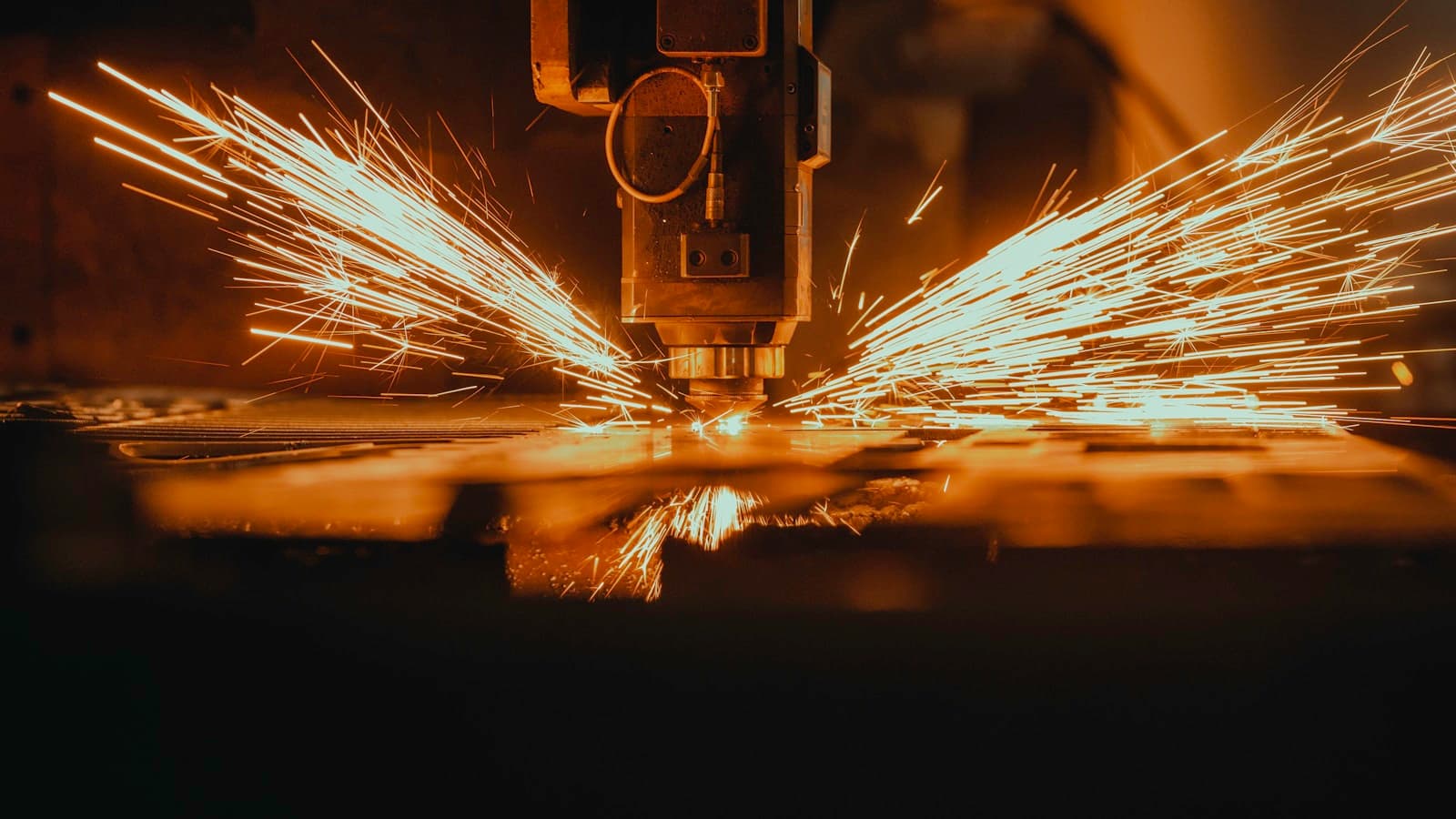
A laser cutter left running with nobody watching it is a real fire hazard, not a hypothetical one, which is why a fire extinguisher and functioning ventilation belong in the same budget line as the machine itself rather than getting treated as accessories to add later.
Prices span an enormous range: a basic diode machine can be had for a few hundred dollars, while an enclosed CO2 system costs ten times that. What you enter here should match the actual machine under consideration, plus the ventilation and material costs that come with running it, not just a number pulled from the cheapest listing you found.
These key factors affect laser engraver affordability
Laser type and price tier
Diode machines are the affordable end of the category. A lower-power 5 to 10 watt unit like the Ortur Laser Master runs $200 to $500, and a 20-watt-plus diode model still tops out under $900. CO2 systems cost more across the board, from around $800 for a bare tube setup to $3,000-$6,000 for an enclosed machine like a Glowforge or xTool P2 that cuts faster and handles a wider range of materials. Fiber lasers occupy their own niche, mostly bought for marking metal and jewelry, and run $1,500 to $4,000.
Material costs
Plywood and basswood sheets run $1 to $3 a square foot, acrylic $2 to $5 depending on thickness and color. Leather for engraved goods costs more, typically $5 to $15 a square foot, and blanks made specifically for marking, slate, tile, anodized aluminum, run $2 to $10 apiece.
Ventilation and safety
Higher-wattage and CO2 machines put out enough smoke that venting outdoors, or running a carbon filter unit for around $200 to $400 in an apartment, is standard practice rather than a luxury upgrade; a basic fan and duct kit alone runs $50 to $150. Material choice matters here too: PVC and vinyl release chlorine gas when cut, and several other coated or treated materials shouldn't go anywhere near a laser bed regardless of how good the price on the sheet was. A fire extinguisher and a flame-retardant mat add another $50 to $100 to the setup.
Consumables and maintenance
Diode modules dim with age and run $80 to $300 to replace once they do. CO2 tubes wear out faster, typically needing a swap every couple of years at $150 to $400. A honeycomb bed to protect the cutting surface is a one-time $30 to $60, and lens cleaning kits, needed often to keep cuts crisp, cost $15 to $25.
Software
Most diode and CO2 machines come with usable software included, though Glowforge holds some features behind a roughly $50-a-month cloud subscription. LightBurn, a third-party program that works across brands, is a one-time $60 purchase and popular enough among owners that it's often worth buying regardless of what shipped with the machine.
How to use your results
- Enter the full price of the machine plus any bundled honeycomb bed, exhaust hose, or software license included in the listing.
- If your result shows the purchase is a stretch, look at diode lasers before considering an enclosed CO2 system that costs several times more.
- Factor in a ventilation setup as part of your total budget, especially if you'll be running the machine indoors or in an apartment.
- Recheck your estimate if you're planning recurring material purchases like plywood or acrylic sheets for a side business, since those add up separately from the equipment cost.
Ways to increase how much laser engraver you can afford
- Start with a mid-power diode laser instead of jumping to an enclosed CO2 system that can cost 5 to 10 times as much.
- Look for open-box or refurbished units from manufacturers like Glowforge or xTool, often discounted 15 to 25 percent.
- Buy scrap or off-cut plywood and acrylic from local sign shops or cabinet makers instead of full retail sheets.
- Use free software like LightBurn's trial or manufacturer-included tools before paying for a premium license.
- Build your own exhaust setup with a standard inline duct fan instead of a branded filtration accessory, cutting ventilation costs by half.
More tech & hobbies calculators
Peer comparison data
Bureau of Labor Statistics (median income by age), Experian (credit score by age)
Used by the “how you compare” figures in the sidebar, not by the costs on this page.
Every figure on this site, with its source and the date it was last verified
How you compare
Income
Credit score
Nothing added yet - add something to see your risk.