Want the occasional useful email?
New calculators, updated cost data, and the occasional money-saving guide. No account needed, and you can leave any time.
By Alex Diaz · How we calculate this
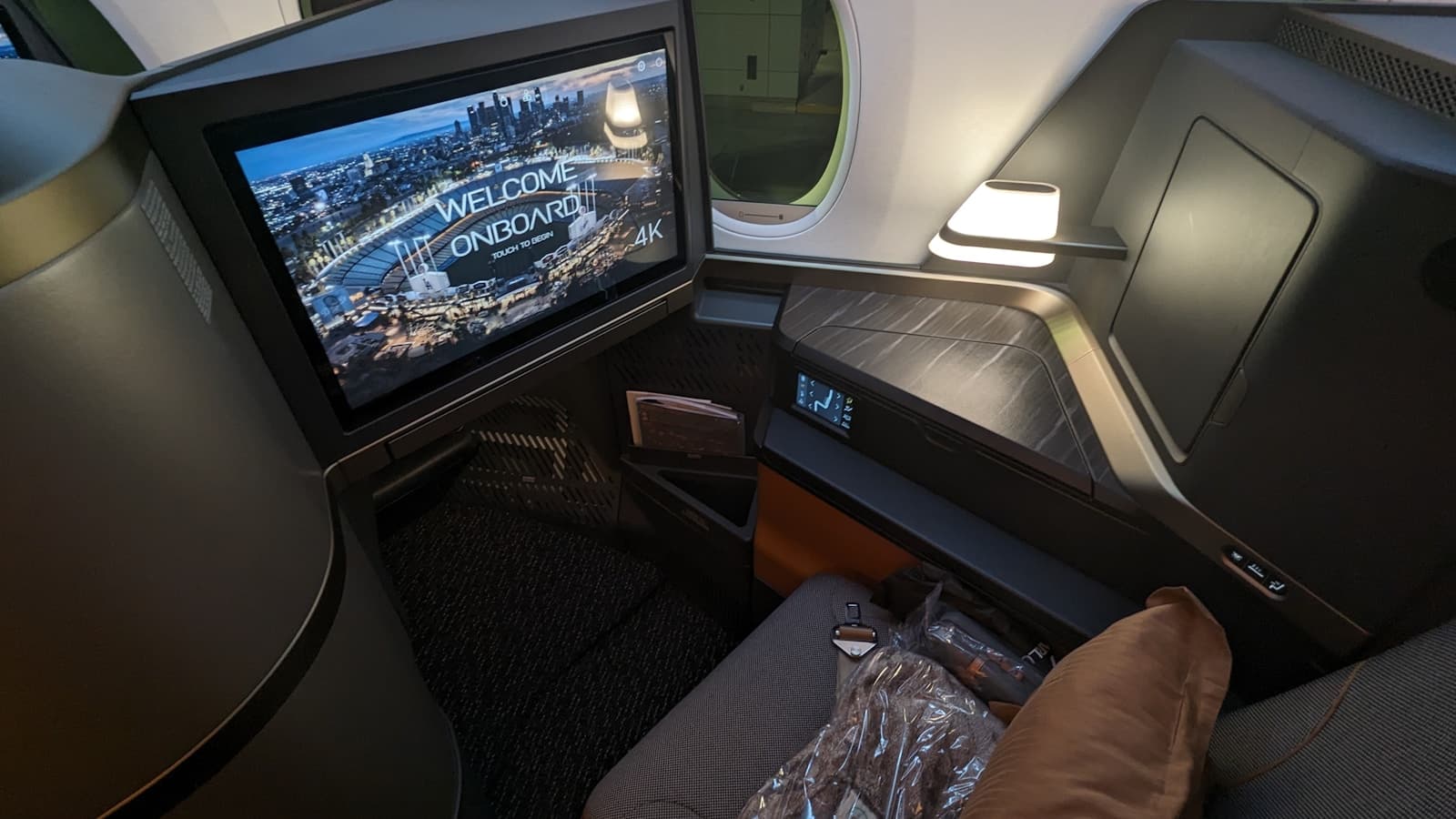
Domestic first class is really just a wider seat and a free drink - airlines usually price it $200 to $600 over economy on the same flight. International first class is a different animal: on a long-haul route to Asia, the Middle East, or Australia, the fare can run five to ten times the economy price, and the suites-with-a-door product on carriers like Emirates or Singapore Airlines can top $15,000 one-way. Almost nobody flying up front on those routes is paying that fare in cash - they're redeeming miles.
These key factors affect first-class flight affordability
Route and airline tier
A domestic first-class seat is a modest step up - typically $500 to $1,500 one-way, sometimes less on a short hop. Fly internationally and the math changes entirely: first class to Asia or the Middle East on a full-service carrier can run $5,000 to $15,000 one-way, with the newest private-suite products sitting at the very top of that range.
Business versus first class price gap
Business class already gets you a lie-flat seat on most international widebodies, so the added cost of first is really paying for privacy, a bigger suite, and more attentive service rather than a fundamentally different flying experience. That premium typically runs two to four times the business fare on the same route.
Points and miles as an alternative payment
Cash fares this high price most travelers out entirely, which is why miles and points redemptions are how the majority of passengers actually end up in a first-class cabin. A first-class award can deliver outsized value per point compared to redeeming the same miles on an economy seat, which is part of why airlines release so few of those seats to award availability.
Booking timing
Airlines release only a handful of first-class seats per flight, whether for cash or miles, so availability dries up fast on popular routes. Booking close to a year out gives the best shot at a fare or an award seat, though a last-minute upgrade offer at check-in occasionally turns up for a fraction of the walk-up price.
How to use your results
- Compare business class pricing on the same route, since the price jump to first class is often two to four times for a similar lie-flat experience.
- Check whether miles or points redemption is a better value than paying cash, since first-class awards often deliver strong value per point.
- Book well in advance for the best fare or award availability, since first-class seats are limited in number.
- Recheck your total against the specific route and airline, since international first class pricing varies enormously by carrier.
Ways to increase how much first-class flight you can afford
- Book business class instead of first class, which delivers a similar lie-flat experience on most international carriers at a fraction of the price.
- Use accumulated airline miles or credit card points instead of paying cash for the ticket.
- Watch for mistake fares or first-class sales, which occasionally appear on specific routes.
- Ask about last-minute upgrade offers at check-in, sometimes available for a fraction of the full first-class fare.
More lifestyle & luxury calculators
Peer comparison data
Bureau of Labor Statistics (median income by age), Experian (credit score by age)
Used by the “how you compare” figures in the sidebar, not by the costs on this page.
Every figure on this site, with its source and the date it was last verified
How you compare
Income
Credit score
Nothing added yet - add something to see your risk.