Want the occasional useful email?
New calculators, updated cost data, and the occasional money-saving guide. No account needed, and you can leave any time.
By Alex Diaz · How we calculate this
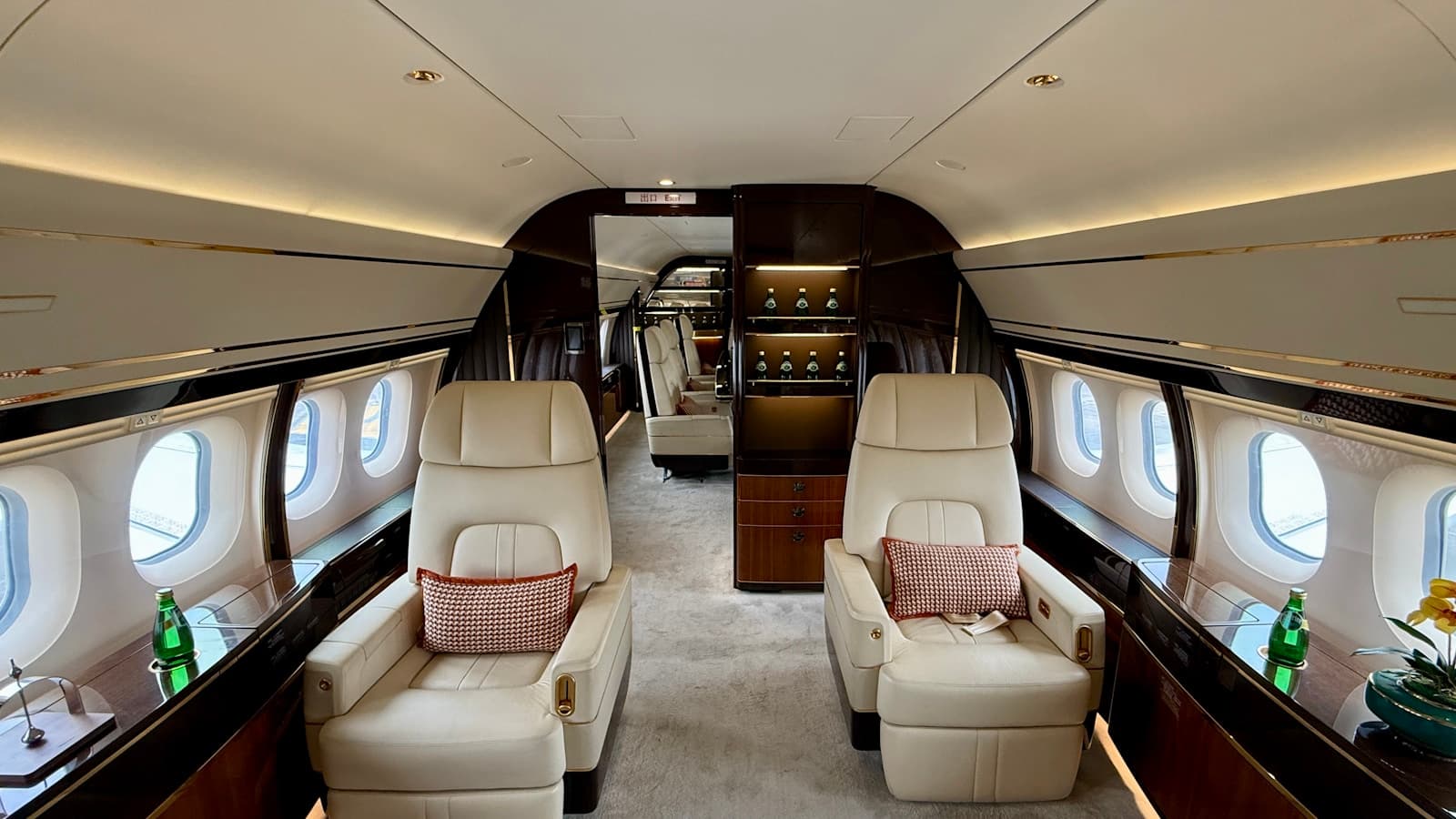
Jet cards flip the usual subscription model on its head: instead of billing you every month, the operator sells you a block of flight hours upfront, commonly 25 hours, locked in at a fixed hourly rate for the length of the contract. You draw down that balance as you fly, and the balance is what actually determines your cost, not a recurring due.
Because flying is lumpy - a family might log eight hours in December and none in February - it makes more sense to average a year of expected flying into a monthly number than to judge affordability off your busiest travel month. That's the figure this calculator wants.
These key factors affect jet card membership affordability
Hourly rates vary widely by aircraft category
Light jets like the Phenom 300 or Citation CJ3 run $3,500 to $5,500 per flight hour on a jet card. Step up to a midsize cabin, a Citation Latitude or Hawker 900XP, and hourly rates run $6,000 to $8,500. Super-midsize and heavy jets such as the Challenger 350 or Gulfstream G280 push $9,000 to $13,000 or more per hour. A family flying 25 hours a year in a light jet is looking at roughly $87,500 to $137,500 annually, call it $7,300 to $11,500 a month once you spread it out.
Prepaid blocks and deposits tie up capital upfront
Cards are sold in hour blocks, most commonly 25 hours, though a few providers offer a 10-hour starter card for people testing the waters. A 25-hour light jet block runs $100,000 to $140,000 paid before you ever board, and a midsize block often lands between $150,000 and $220,000. That deposit sits separate from, and in addition to, the monthly draw-down as hours actually get used, which is easy to underweight if you're only looking at the advertised hourly rate.
Peak-day surcharges and blackout dates add unplanned cost
Thanksgiving, Christmas, New Year's, and the Fourth of July all carry peak-day surcharges on nearly every card program, typically adding $1,000 to $2,500 per flight hour on top of the base rate. A handful of providers still block out certain dates entirely rather than surcharge them. If your flying tends to cluster around holidays and long weekends, which for most cardholders it does, budget for the surcharged rate, not the number in the brochure.
Jet cards sit between charter and fractional ownership
On-demand charter costs 15 to 30 percent more per flight hour than a locked-in card rate, but comes with zero commitment. Fractional ownership sits at the other extreme: a 1/16 to 1/4 share of an aircraft typically requires a buy-in of $500,000 to $5 million, plus monthly management fees of $10,000 to $20,000 whether you fly or not. Full ownership adds crew, hangar, insurance, and maintenance that commonly top $1 million a year even for a light jet. Measured against either alternative, a jet card is the lowest-commitment way into private flying, which is the comparison worth making before signing a multi-year card.
Contract length and program fees factor into the real cost
Most cards lock your hourly rate for 12 to 24 months, and many charge a separate program fee, anywhere from a few hundred to a few thousand dollars a year, on top of what you pay for flight hours. Hours left on the card when the term ends are sometimes forfeited outright, and rolling them over usually requires signing a renewal. Budget for the full commitment period, not just this year's flying.
How to use your results
- Average your expected annual flight hours into a monthly cost rather than basing your estimate on a single busy travel month.
- Add in the peak-day surcharge rate for any holiday or weekend travel you expect, since that's when most private flying actually happens.
- Compare the monthly figure against what occasional charter flights would cost for your actual flying pattern, since a card only pays off with consistent use.
- Recheck your estimate whenever your card comes up for renewal, since hourly rates and surcharges are typically repriced at each renewal cycle.
Ways to make a jet card membership more affordable
- Start with a smaller block, such as a 10-hour card, to test your actual flying frequency before committing to a larger 25-hour prepay.
- Choose a light jet category if your typical trip is under three hours and doesn't require the cabin space of a midsize aircraft.
- Fly on non-peak days when possible to avoid the $1,000 to $2,500 per hour holiday and weekend surcharges.
- Share a card among family members or a small group to spread the fixed deposit and program fees across more people.
- Compare multiple providers' guaranteed availability windows, since shorter guarantee windows (6-10 hours notice) often come with lower hourly rates than instant-availability programs.
More lifestyle & luxury calculators
Peer comparison data
Bureau of Labor Statistics (median income by age), Experian (credit score by age)
Used by the “how you compare” figures in the sidebar, not by the costs on this page.
Every figure on this site, with its source and the date it was last verified
How you compare
Income
Credit score
Nothing added yet - add something to see your risk.