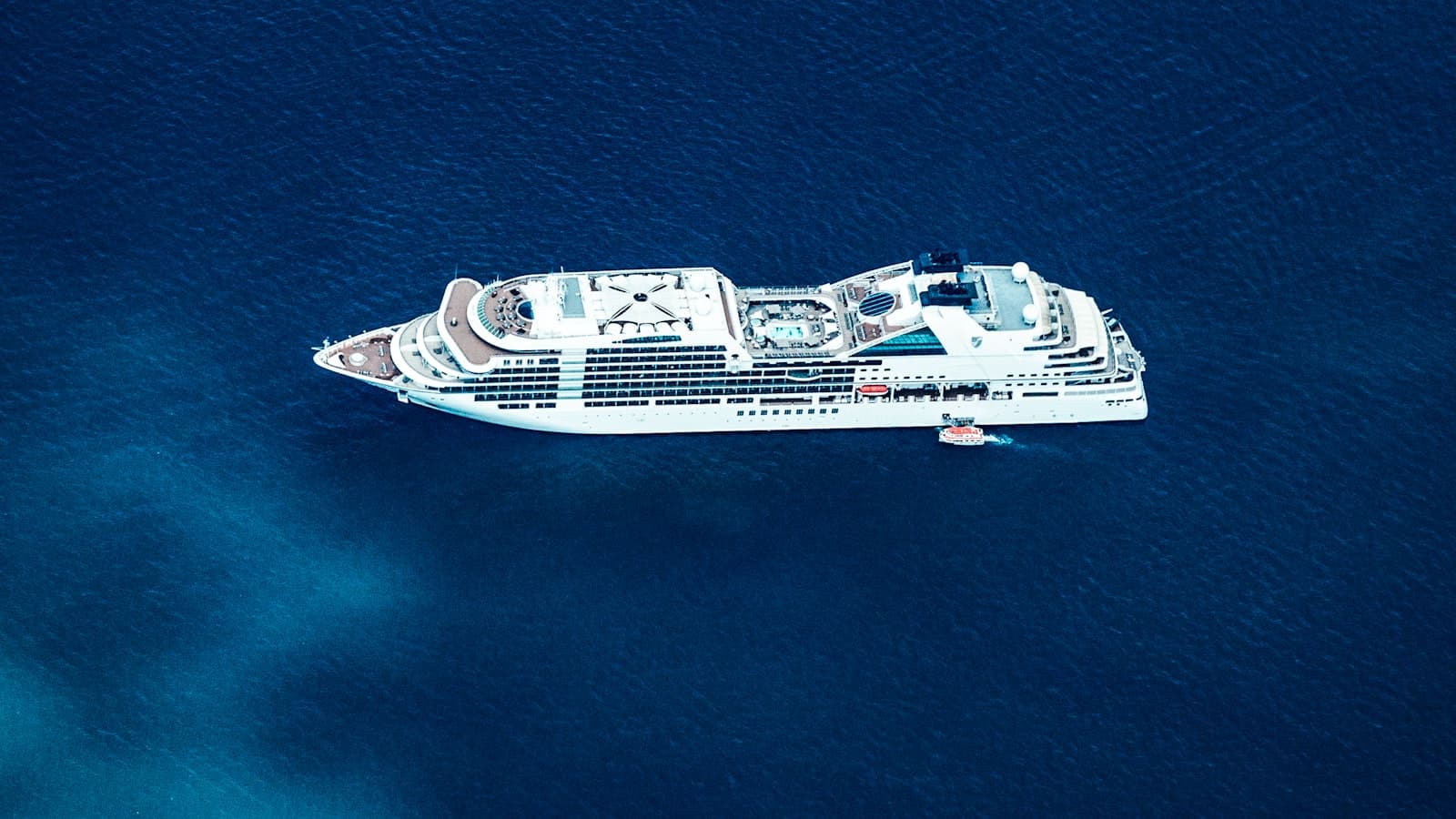
A cruise gets booked as a single price tag, so that's how your estimate treats it too: the total trip cost weighed against roughly three months of your budget, more of a stretch goal to save toward than a bill you'd pay every month.
These key factors affect cruise affordability
Income and expenses
It's not your income alone that decides whether a cruise fits - it's whatever's left of it after your regular bills and debt clear. That's the number we weigh the total trip cost against.
Existing debt
Put a cruise on a card carrying a high-interest balance and the math turns against you fast - the interest alone can end up costing more than the trip did. If you're already carrying high-interest debt, paying that down first is almost always the better move before booking anything new.
Base fare vs. add-on costs
The fare you see advertised is rarely the fare you actually pay. Gratuities alone are usually auto-charged to your onboard account at somewhere around $16 to $25 per person, per day, and that's before drink packages, specialty dining, shore excursions, or wifi - all billed separately, and all capable of adding a real percentage on top of the base price by the time you disembark.
Cash vs. credit
Pay it off before interest kicks in, and a cruise costs exactly what the booking said. Carry it on a card for a few months instead, and the real total quietly climbs past the advertised fare - the classic way a good deal turns into a mediocre one.
How to use your results
Try pricing the actual cruise you're considering rather than the base fare alone:
- Add gratuities, drink packages, excursions, and wifi to the base fare for a realistic total.
- Include your existing debt for a realistic picture of what's actually left to spend.
- Compare cabin categories and sailing dates for the same itinerary.
Ways to increase how much cruise you can afford
- Book during a sale or with a flexible cabin category.
- Skip pricier add-ons like drink packages or specialty dining if you don't need them.
- Save specifically for the trip rather than financing it afterward.
- Pay down high-interest debt first so more of the budget goes to the trip.
More travel calculators
Sources
Bureau of Labor Statistics (median income by age, shown in the sidebar), Experian (credit score by age, shown in the sidebar) - starting points to compare against, not real-time quotes.
Nothing added yet - add something to see your risk.