Want the occasional useful email?
New calculators, updated cost data, and the occasional money-saving guide. No account needed, and you can leave any time.
By Alex Diaz · How we calculate this
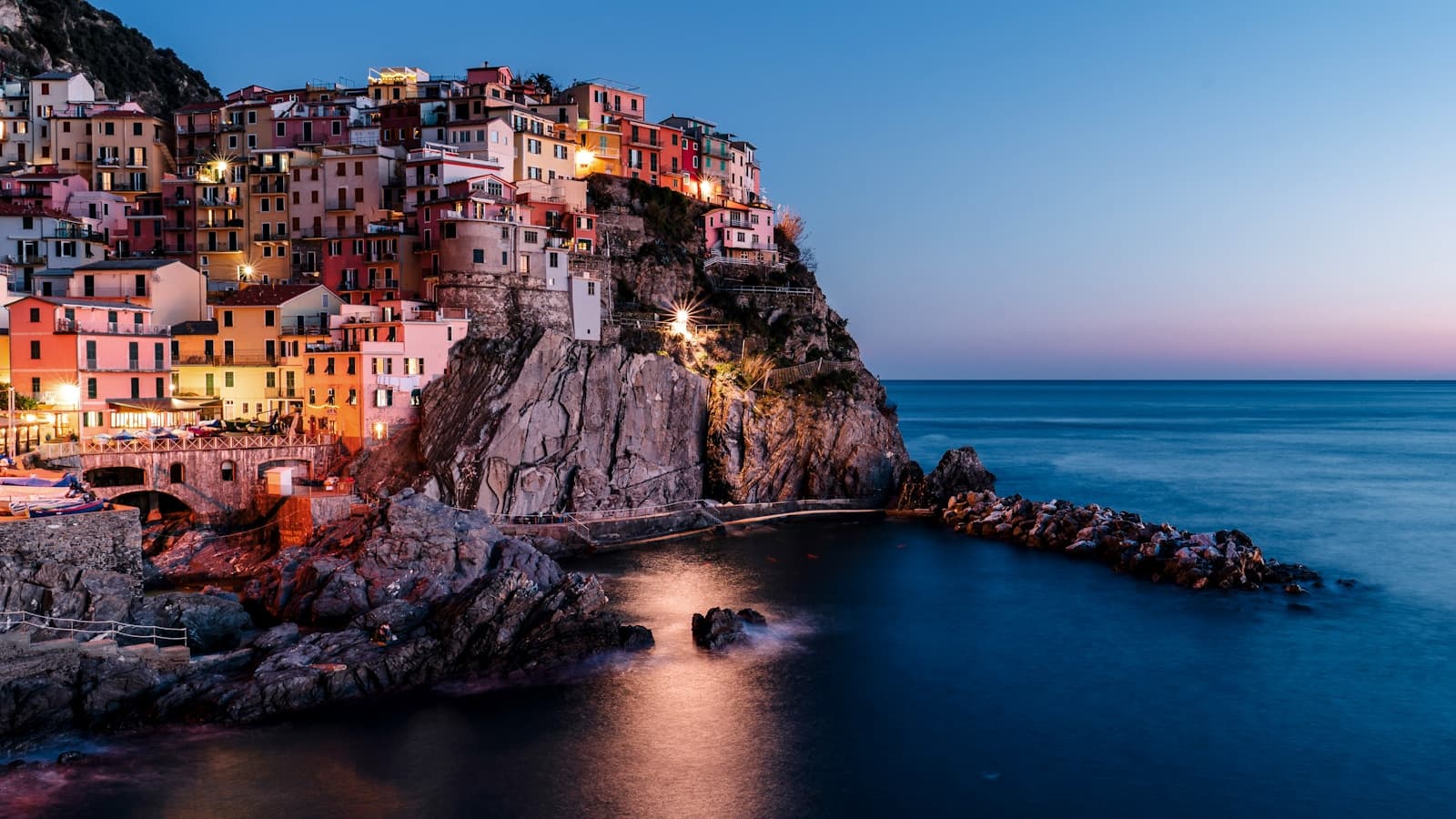
Italy's high-speed rail network connects Rome, Florence, and Venice for roughly $30 to $80 a segment on Trenitalia or the competing Italo line, often beating a rental car on both cost and time for a multi-city itinerary. Where you go matters as much as how you get there: a week split between Rome and less-touristed regions like Puglia or Le Marche costs meaningfully less than the same week spent in Venice, on the Amalfi Coast, or in Cinque Terre, where hotel and restaurant prices carry a real premium.
These key factors affect trip to Italy affordability
Flights
Round-trip flights from the US to Italy typically run $600-1,200 per person in economy, and that climbs further during the June-through-August rush when demand from American and European travelers peaks at the same time.
Accommodations
Mid-range hotels in Rome and Florence run $150-300 a night. Venice pushes past that range simply because it's an island with a fixed, limited hotel stock, so the same three-star quality often costs 20-30% more than an equivalent room in Rome. Budget guesthouses and agriturismo stays in the countryside can bring the average back down to $80-150 a night, and a farmhouse stay in Tuscany or Umbria often comes with a home-cooked dinner that would otherwise cost extra in a city restaurant.
Regional train travel and city-to-city transport
Trenitalia and Italo both run frequent high-speed service between major cities for about $30-80 a segment if booked a few weeks ahead, though same-day walk-up fares run noticeably higher. A Rome-Florence-Venice-Rome loop adds up to a real cost once the trip covers three or four cities instead of one home base.
Food and activities
Dining runs $30-70 per person a day depending on how many sit-down dinners versus quick lunches make the itinerary, and museum or attraction fees of $15-30 each add up fast across a multi-city trip, especially with must-sees like the Vatican Museums or the Uffizi Gallery running toward the higher end of that range.
How to use your results
- Add regional train costs separately if visiting multiple cities, since intercity travel is a real line item in an Italy trip.
- Budget higher for accommodations in Venice specifically, since it typically runs more expensive than Rome or Florence.
- Include museum and attraction fees in your daily budget, since these add up over a multi-day, multi-city trip.
- Recheck your total against travel season, since summer pricing from June through August runs noticeably higher than shoulder season.
Ways to increase how much your trip to Italy you can afford
- Travel in shoulder season, April to May or September to October, for lower flight and hotel prices with still-comfortable weather.
- Focus on fewer cities to cut down on intercity train costs and lodging changes.
- Book accommodations outside the historic center, where prices are often 20% to 30% lower with a short transit into town.
- Use city tourist passes that bundle museum entries and transit, often cheaper than paying per attraction.
More travel calculators
Peer comparison data
Bureau of Labor Statistics (median income by age), Experian (credit score by age)
Used by the “how you compare” figures in the sidebar, not by the costs on this page.
Every figure on this site, with its source and the date it was last verified
How you compare
Income
Credit score
Nothing added yet - add something to see your risk.