Want the occasional useful email?
New calculators, updated cost data, and the occasional money-saving guide. No account needed, and you can leave any time.
By Alex Diaz · How we calculate this
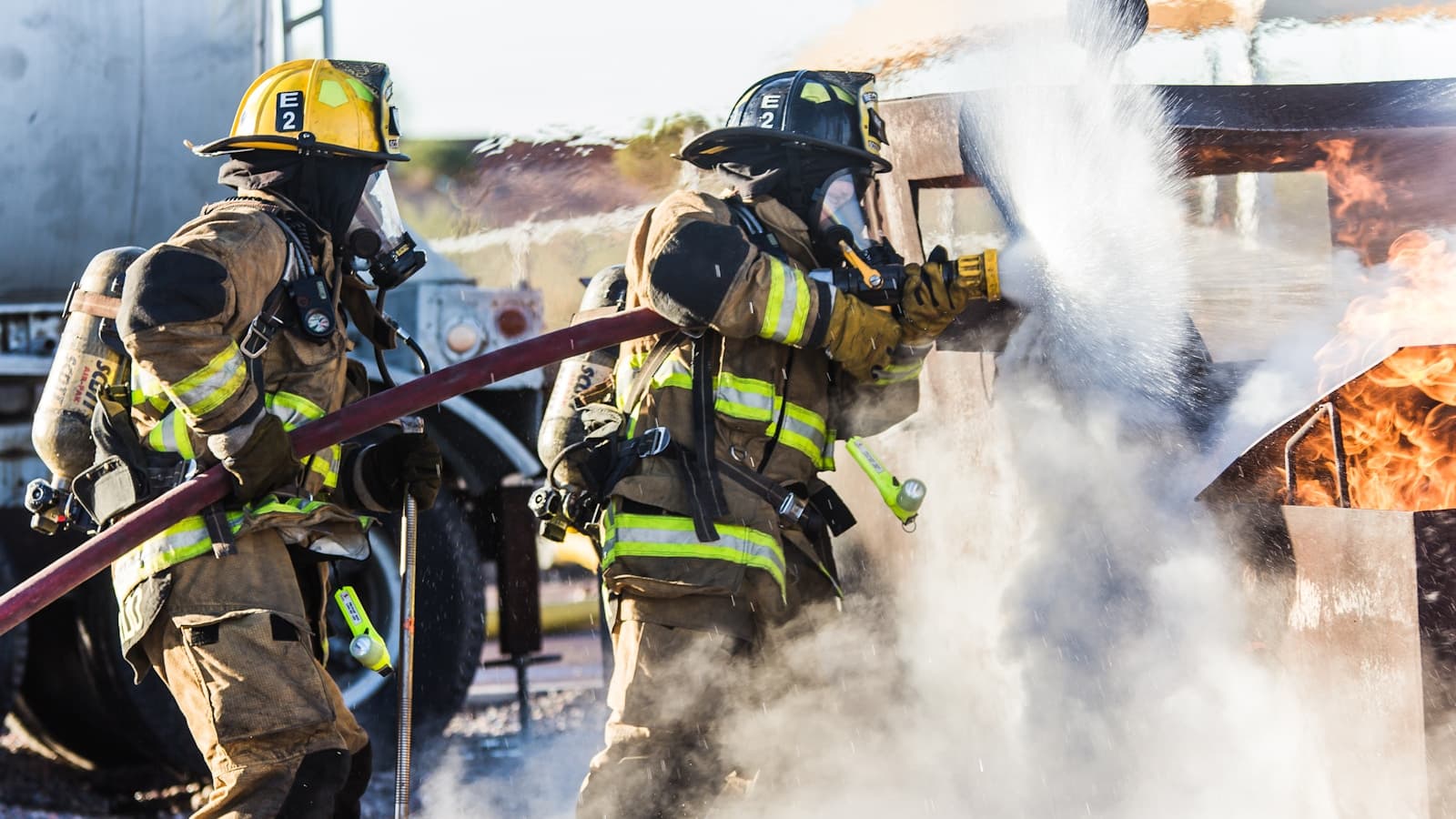
Fire departments that hire recruits before sending them through training often cover the academy at no personal cost, which is worth checking before you assume you'll be paying out of pocket. Where that's not how it works locally, candidates complete an independent academy first to become a competitive applicant, and that typically runs $3,000-$8,000 over 12-16 weeks. Since this is a one-time cost, the calculator weighs the total academy cost you enter against roughly three months of your budget rather than a single month's income.
These key factors affect firefighter academy affordability
Whether the academy is paid or sponsored changes the real cost
Whether you pay anything at all comes down to hiring order. Departments that hire first and train second run their own paid academy, so your real risk is about the job search, not tuition. Where that isn't the norm locally, candidates complete an independent academy at a community college to become a stronger applicant, and those programs run $3,000-$8,000 over 12-16 weeks, which is where the $5,000 default lands.
Required certifications stack on top of the academy itself
Most departments also require Firefighter I & II certification under NFPA 1001, EMT-Basic certification (often a separate $1,000-$1,500), and a passing score on the CPAT physical ability test. CPAT itself carries a $150-$250 testing fee and requires finishing an eight-event obstacle circuit, in full gear, in under 10 minutes and 20 seconds. None of these are optional add-ons. Total out-of-pocket cost before you ever draw a firefighter's paycheck can run well past the academy tuition alone once they're all added in.
Hiring is competitive, so the timeline to a paycheck stretches out
Entry-level pay commonly starts in the $40,000-$50,000 range, climbing toward a BLS-reported median near $57,000 with experience. The harder number to plan around is the wait, not the pay. Departments routinely field hundreds of applications for a handful of openings, and it's common to spend six to eighteen months applying to multiple departments after finishing the academy before landing a paid position. Pair the academy cost with that runway, not just with your current paycheck.
How to use your results
- Check whether your target departments hire before or after academy training, since that changes who pays for it
- Add EMT certification and CPAT fees to your total if your target departments require them
- Use the result alongside a 6-18 month job-search runway, since hiring is competitive even after finishing the academy
- If applying to multiple departments across a region, budget for CPAT retest and application fees at each one
Ways to make a firefighter academy more affordable
- Apply to departments that sponsor academy training for hired recruits before paying for an independent program
- Complete EMT certification first, since some fire academies give credit or reduced hours for it
- Volunteer or work as a reserve firefighter in your area, which sometimes leads to sponsored training
- Look into state or municipal grants for public safety training, which some community colleges administer directly
More career & life changes calculators
Peer comparison data
Bureau of Labor Statistics (median income by age), Experian (credit score by age)
Used by the “how you compare” figures in the sidebar, not by the costs on this page.
Every figure on this site, with its source and the date it was last verified
How you compare
Income
Credit score
Nothing added yet - add something to see your risk.